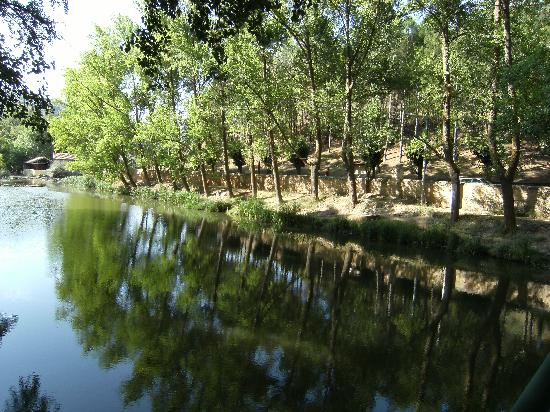
Plan de Dinamización de Producto Turístico Ruta del Vino Ribera del DueroTourism Promotion Plan for Ruta del Vino Ribera del Duero

A la ribera del duero

Hay una serie de tendencias que son incuestionables aunque muchas bodegas aún no lo tengan muy claro. Y son:

Que con la globalización las Bodegas necesitan diferenciarse mucho más, de sus competidores.
Que la manera de diferenciarse más eficaz es aparte de por el propio vino y su presentación, de todo lo que rodea al vino. (las maravillosas historias que hay alrededor del vino).
Que, creciendo mucho la masa de consumidores que se interesan y profundizan sobre la cultura del vino, lo que más está creciendo, y con diferencia, son el número de personas que consideran muy atractivo el entorno del mundo del vino, el turismo enológico.
Que esto es una corriente que aún no ha arrancado en España con la fuerza con la que está sucediendo en otros países. (Italia, etc).
Cada vez hay más gente que huye del turismo de playa, cuyo principal defecto es el de haberse convertido el algo tremendamente homogéneo, frente a un turismo, mucho más atractivo y heterogéneo como puede ser el turismo rural y el turismo enológico.

Esto lo saben las Bodegas, y lo muestran con el tipo de visitas que ofrecen de forma regular a sus instalaciones. El tipo de lenguaje que utilizan es el que se usa para alguien que no ha visitado una Bodega anteriormente. Y por el tipo de preguntas, o de no preguntas que hacen los visitantes, uno percibe que los visitantes no están buscando tampoco un nivel más alto.

Tuve la suerte de coincidir con las responsables de “Consorcio Ruta del Vino” en mi reciente visita a Aranda con motivo de la reunión entre bloggers y Bodegas. Me explicaron su proyecto. Es este un proyecto muy bien planificado con un importante presupuesto en el que participan un buen número de organismos oficiales. Entre estos organismos: la Secretaría de Estado de TurismoDO de Ribera de Duero, las diputaciones de Valladolid, Soria, Segovia y Burgos, 44 ayuntamientos, 33 Bodegas, 11 Alojamientos, etc

Me preguntaba alguna Bodega sobre si debería de participar. Parece ser que el coste por Bodega es de no más de 2000 euros/año. Mi respuesta es que sin ninguna duda. Es este uno de los trenes en lo que, o te subes o te quedas perdido en el camino.

Es un problema de actitud. Algunas se centran en hacer un buen vino, pero se fijan poco o nada en lo que ocurre a su alrededor.

Y alrededor están pasando muchísimas cosas que hacen que una Bodega que tuvo éxito en el pasado y en el presente, posiblemente no lo tenga en el futuro.

Se trata de ser inquieto. Y ante la pregunta de si había que estar en Winefuture, o en Finewine o en la 1ª Feria Internacional de Vino Ecológico en España (si elaboras vino ecológico), mi respuesta es en todos casos afirmativa. Porque hay que saber qué hacen los demás, y lo que harán. Para luego, decidir cada uno su camino. Pero es muy fácil decirlo desde fuera sin ser responsable de un presupuesto

Este negocio se va haciendo cada vez más complejo. Solo saldrán adelante aquellos que hagan muy buen vino, y/o tengan una gran personalidad, y/o sepan aprovechar las nuevas formas de comunicación y comercialización.

Quiero dar mi enhorabuena a todas las Bodegas que han decidido apostar por el proyecto. Este proyecto ayudará a las Bodegas de Ribera de Duero a definir su camino en los próximos años. Y con este proyecto pasa lo mismo que con las nuevas tecnologías. Le sacarán más partido aquellas Bodegas que apuesten más por el proyecto. A todo aquél que siembre recogerá su cosecha.

Gracias a Cristina Prat y a Sara García por haberme atendido como lo han hecho. Son dos grandísimas profesionales que harán de este proyecto algo que ya va tomando forma un éxito.

Para aquellos que quieran conocer el proyecto a fondo les animo a que entren en la página que se ha creado para dar información sobre el tema. Ruta del Vino Ribera del Duero

Post en Inglés: Tourism Promotion Plan for Aranda de Duero

A la ribera del duero

There are a number of tendencies that are evident today, even though many wineries are still questioning them, such as the following:

Wineries need to differentiate themselves from their competitors more than before, given the ongoing process of globalization
-The way to differentiate better (apart form the actual wine and its presentation) is by telling the story of the winery
-There are more and more consumers that are interested in learning about the world of wine, especially those who are interested in areas peripheral to, but related to the world of wine, such as wine tourism.
-This is a tendency that is not in Spain as strong yet as it is on the abroad, and it comes from there with a tremendous force.

There are more and more people that are rejecting typical beach-tourism which is boring and mass-marketed, and are looking for something more interesting and individual, such as rural tourism with a wine connection.

Wineries know this, and it shows from the type of visits and experiences they regularly offer at their installations. The type of language they use is directed to people who have never been to a winery before. And from the type of questions asked (and not asked) one can tell that the visitors are not looking for a particularly sophisticated or highbrow level.

I was lucky enough to meet the people from the Consorcio Ruta del Vino” during my visit to Aranda for the tasting organized for Bloggers and Wineries. They told me about their project, which has quite an important budget with many different public bodies involved.

A few wineries asked me if they should participate or not. At a cost per winery of about €2000/year, my reply would be that they should definitely participate. This is a ‘train’ that you either catch or get left behind!

It’s an attitude problem. Some wineries concentrate on making good wine, and don’t pay any attention to what’s going on around them.

And there are lots of things going on that can have a huge impact on whether a winery will be successful in the future, even it’s been successful in the past.

Like I said, it’s an attitude problem. In answer to a similar question of “Should I participate in WineFuture, or FineWine or the International Organic Wine Fair?” my answer is undoubtedly a “Yes”. Because it’s important to know what other wineries are doing and what they’re going to do. Then you can make an informed decision. But it’s easy to say that, when you are not the responsible of don’a limited budget to administer!

The wine business is becoming evermore complex. The only wineries that will survive are those that make really good wine and/or have a charismatic personality and/or know how to make use of the new means of communication and commercialization.

In summary, congratulations to the wineries that have decided to go along with the Ruta del Vino de Ribera de Duero project, which will be a great help for them in defining their future path over the next few years. The same applies to the new technologies: the wineries that have gone with Ribera de Duero will make better use of them. From a tiny acorn the might oak grows!

My thanks to Cristina Prat and Sara García for spending so much time with me to explain their project. They are very competent professionals who will ensure the success of the Ribera de Duero project.

For more details and information of the project, see the webpage here: rutadelvinoriberadelduero.es

Post in Spanish: Plan de dinamización de Producto Turístico Aranda de Duero
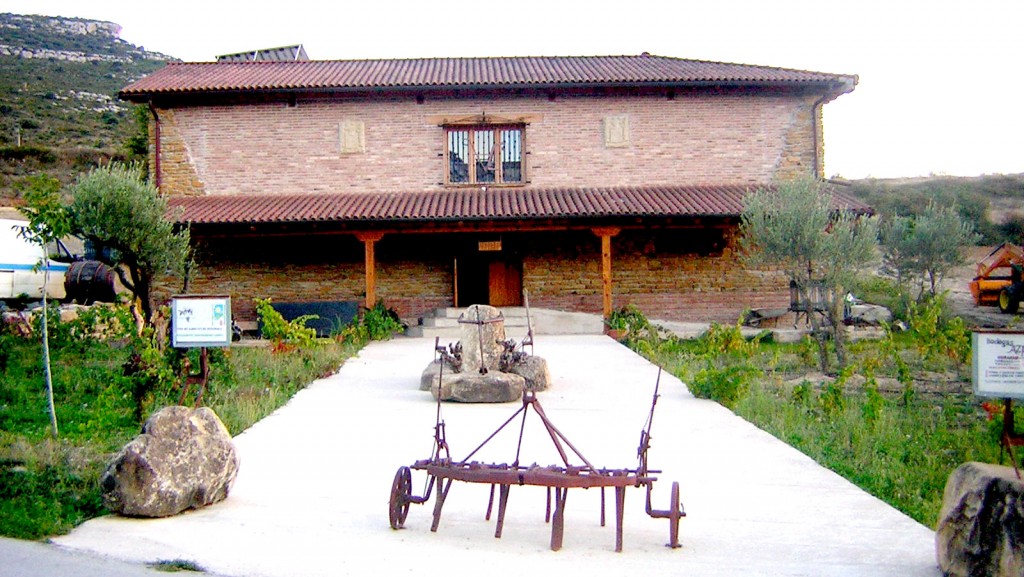
Bodegas Azpea en la primera Feria Internacional del Vino Ecológico Bodegas Azpea on the First International Organic Wine Fair, held in Spain.

 Bodegas Azpea

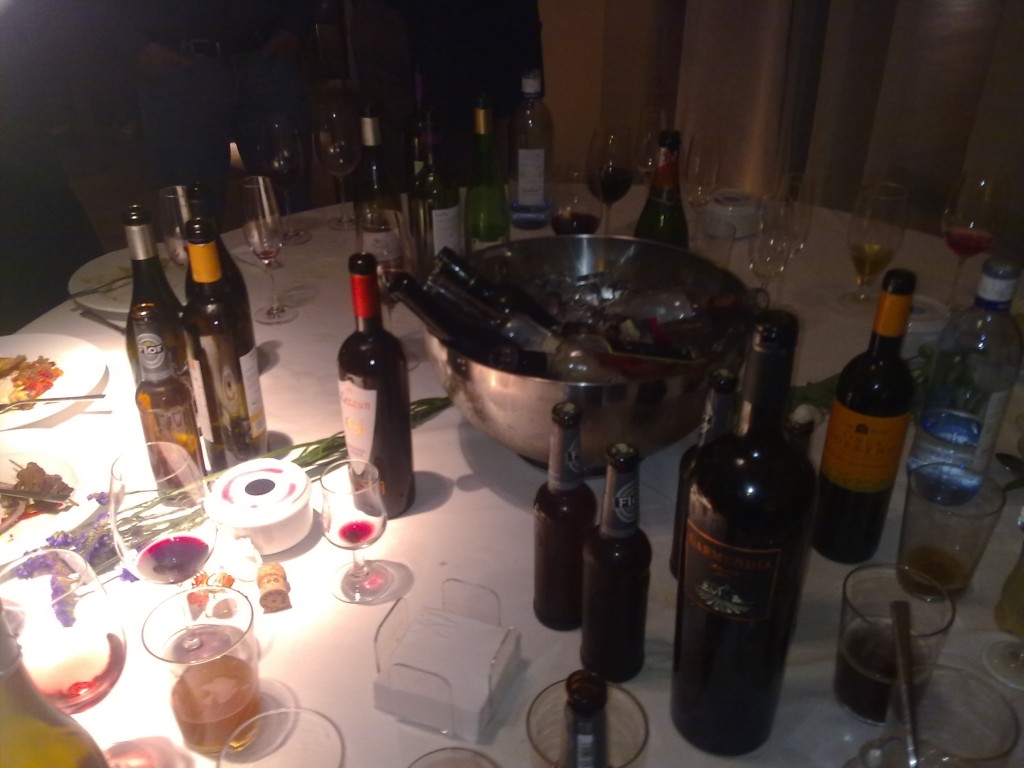
Estábamos en la cena de la Feria Internacional del Vino Ecológico. La cena era tipo buffet para facilitar el contacto entre unos y otros.

Me encontré una mesa en la que parecía haber gente interesante. Y realmente lo eran. Toda la comida estuvo regada con estupendos vinos tintos.

Pero, llegó el postre. Y la esposa de uno de los bodegueros que estaba sentada a la mesa tuvo el detalle de pasarme una copa de moscatel.

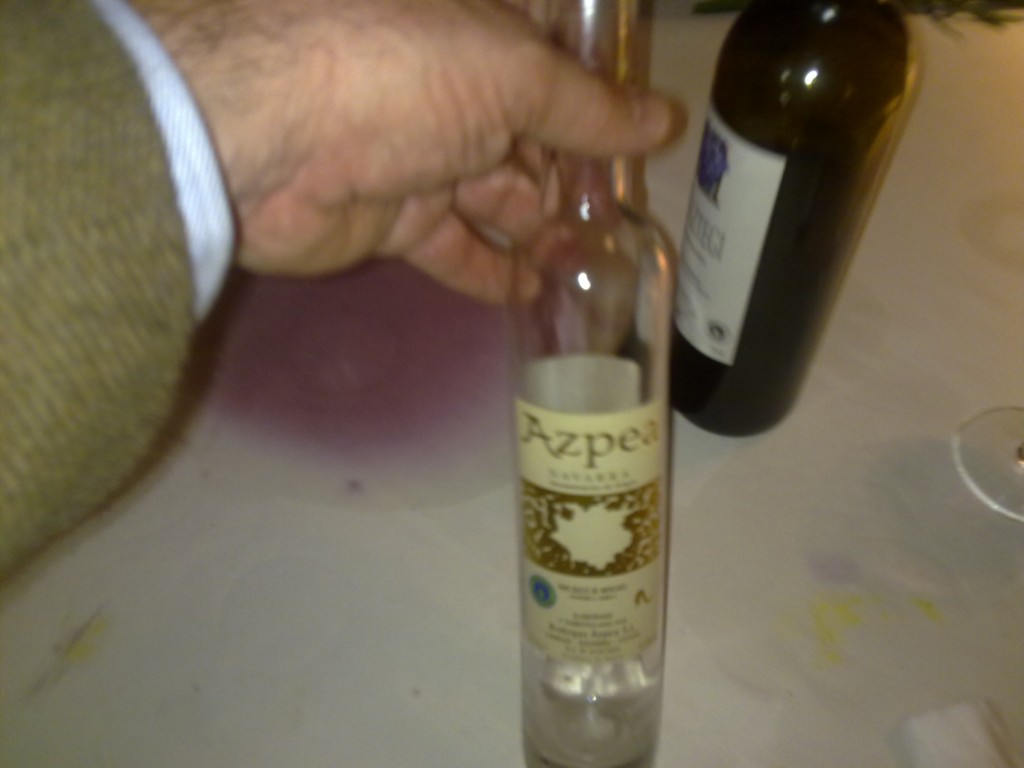
El moscatel estaba delicioso y maridaba perfectamente con lo que estábamos tomando. Me puse a buscar alguna otra botella porque quería repetir, pero no hubo manera. Solo veía botellas vacías del moscatel, hasta que, por fin encontré una botella con un culín.

Alguien me presentó al dueño de la Bodega, Javier Pérez Fonseca, que me explicó cómo solo saben hacer los viticultores convencidos, por qué se había decantado por la viticultura ecológica. Su charla fue tan interesante que probablemente me impidió conocer a más personas, pero es que lo que contaba era tan apasionante que doy por bien empleado mi tiempo en esa cena.

Lo que sí hice fue grabarle al día siguiente en su stand para que me explicara cómo elabora el Azpea Dulce. Un detalle importante. Unicamente produce en la actualidad 4000 litros de este producto de los 70000 de producción de la Bodega

Y esto es lo que me cuenta Javier sobre su Azpea Dulce, vendimia tardía, botritis.

La Bodega se fundó en el año 2000. Tiene 17,5 hectáreas de viñedo, con cepas de Cabernet Sauvignon, Merlot, tempranillo, garnacha, viura y moscatel de grano menudo.

Producen 70.000 botellas y disponen de moderna tecnología para su elaboración, contando con una pequeña cantidad de barricas de roble que esperan aumentar.

Bodegas Azpea se encuentra en Lumbier, a orillas del río Salazar, a 30 kms de Pamplona.

Javier:

Te comenté en la entrevista que con lo que me comentabas no tenía más remedio que ir a ver tu bodega. Después de haber visto una imagen de tu Bodega mi interés es aún mayor. Por ello en vez de despedirme digo tan solo: …. Hasta luego.

Buscando desesperado un Azpea de moscatel

Post relacionados:
Primera Feria Internacional de Vino Ecológico. Después del evento
Primera Feria Internacional de Vino Ecológico.

En inglés: Bodegas Azpea on the First International Organic Wine Fair, held in Spain.

Bodegas Azpea

I was at the dinner given by the First International Organic Wine Fair (FIVE). It was a buffet-dinner so as to make it easier for us to mix and socialize.

I was at a table with some people who appeared to be interesting. And in fact they were! The whole meal was served with incredibly good red wines.

We were eating our dessert, and the wife of one of the winemakers passed me a glass of Moscatel.

It was delicious and matched perfectly with the dessert. I went to look for another bottle because I wanted another glass but no joy. I could only find empty bottles of the Moscatel in question, until at last I found one with just enough left for a glass.

Someone introduced me to the winemaker, Javier Pérez Fonseca, who convincingly explained to me why he decided to go for organic grape-growing. It was so interesting listening to him that I lost the chance to meet other people; but he was so passionate that I consider the time spent with him as time very well spent indeed.

 What I did was to interview him the next day at his stand and he explained how he made his Azpea Dulce. Interesting fact: he only makes 4000 liters of this amazing wine (out of a total of 70,000 that he produces in the winery).

And this is what Javier told me about his Azpea Dulce, late harvesting and botrytis:

The winery was founded in 2000, and there are 17.5 hectares of vineyards, planted to Cabernet Sauvignon, Merlot, Tempranillo, Garnacha (Grenache), Viura and Moscatel de Grano Menudo (Muscat Blanc à Petit Grains).

He makes 70,000 bottles and has modern technology for wine-making, and only a few oak barrels, though he hopes to acquire more in the future.

The winery (Bodegas Azpea) is located in Lumbier, on the banks of the River Salazar, about 30 km from Pamplona

Javier:

Like I said during the interview, I now have no choice but to go and visit your winery, especially after seeing the photos!

Buscando desesperado un Azpea de moscatel

Related posts:
First International Organic Wine Fair in Spain
First International Organic Wine Fair in Spain. After the event.
In Spanish: Bodegas Azpea en la primera Feria Internacional del Vino Ecológico

Bodegas Escalera en la primera Feria Internacional del Vino EcológicoBodegas Escalera on the First International Organic Wine Fair, held in Spain.

Presentación del Eder Tinto 2009 de Bodegas Escalera

«Empezamos a trabajar nuestra explotación en ecológico porque no nos gustaba la agresividad con la que trataban los cultivos (herbicidas, productos químicos, etc) y tenía que haber alguna manera más natural y menos agresiva con el medio ambiente que la que se estaba haciendo en la agricultura; de hecho, en Europa se van a prohibir más de 400 productos químicos de los 600 que se utilizan en la agricultura actual, en un período de cinco años».

Así empieza un artículo sobre Bodegas Escalera realizado en el Diario de Navarra en 2005, con el título “Crianzas y Reservas, también en ecológico.” 

En 2002 Joseba Landíbar e Isidro Escalera abrieron su Bodega en Beire, cerca de Olite (Navarra) aunque sus familias ya plantaban uva desde el siglo 19.

Joseba, en la primera Feria Internacional del Vino Ecológico realizada en España nos presenta el Eder Tinto 2009

Post relacionados:
Primera Feria Internacional del Vino Ecológico
Primera Feria Internacional de Vino Ecológico. Después del evento
En inglés:
Bodegas Escalera on the First International Organic Wine Fair, held in Spain.Presentation of the Eder red wine 2009 by Bodegas Escalera (Escalera Winery)

«We started focusing on our organic production because we did not like the aggressiveness with which crops were treated (herbicides, chemical products, etc.), and we thought that had to be a more natural and less environmentally aggressive way to handle agriculture. In fact, more than 400 chemical products of the 600 currently used in agriculture will be forbidden in Europe in the following five years».

This is the beginning of the article about Bodegas Escalera (Escalera Winery) published at the Diario de Navarra back in 2005, titled “Crianzas and Reservas may also be organic”.

In 2001, Joseba Landíbar and Isidro Escalera inaugurated their winery in Beire, close to Olite (Navarre), although their families have been growing wine grapes since the XIXth century

Joseba presenting (in Spanish) the Eder Red Wine 2009 at the First International Organic Wine Fair, held in Spain.

Related posts:
First International Organic Wine Fair in Spain
First International Organic Wine Fair in Spain. After the event.
In Spanish: Bodegas Escalera en la primera Feria Internacional del Vino Ecológico


Primera Feria Internacional de Vino Ecológico. Después del eventoFirst International Organic Wine Fair in Spain. After the event.

International organic wine fair in Spain

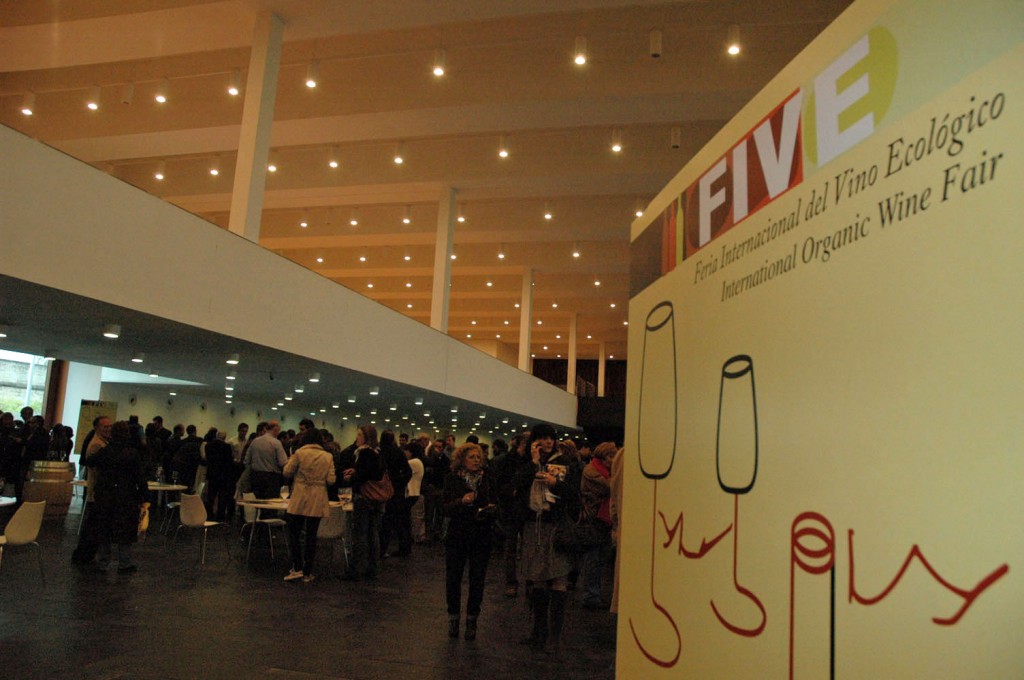
He estado la semana pasada en la Primera Feria Internacional del Vino Ecológico (FIVE) en España. Esta iniciativa no es habitual realizarla a nivel mundial de forma separada del resto de productos ecológicos, o separada de las ferias del vino tradicionales.

Los motivos por los que una feria de estas características debía de hacerse son fáciles de entender. Por un lado una actitud ecológica mueve al planeta de arriba abajo. Todos sin discusión tenemos una actitud ecológica. Todos sabemos que nuestros hijos no verán muchas de las cosas que vimos cuando éramos niños como ellos. El proceso del cambio climático es irreversible. Y lo que podemos hacer es atenuarlo. Otra cosa es la prioridad que se le pueda dar a este problema. Por otro había un deseo de las Bodegas ecológicas de diferenciarse respecto del resto de Bodegas de elaboración convencional.

Datos sobre la inquietud creciente por la elaboración del vino ecológico es evidente. La superficie cultivada y el número de Bodegas que deciden apostar por el vino ecológico, crece de forma continuada. Tanto en el mundo como en España. Curiosamente la demanda en el mercado nacional no parece crecer en la misma medida. Esto hace que las Bodegas ecológicas apuesten de forma aún más decidida por el mercado exterior.

Las 52 Bodegas ahí presentes han tenido la oportunidad de mostrar sus productos a los visitantes más atrevidos y especializados en muchos casos en vino ecológico, como si todo el sector estuviera en Pamplona.

Mis primeras impresiones son las de satisfacción generalizada, tanto por parte de los expositores como por parte de los visitantes. En función del análisis de cada uno sobre el resultado a corto y medio plazo hará que la Feria en próximas ediciones tenga aún mayor éxito. Auguro de todos modos que para la próxima edición habrá más visitantes y más expositores.

Quiero felicitar a los organizadores de FIVE, con Ignacio Bidegain a la cabeza (Sandra Beltrán, etc), por lo bien que ha estado todo. No parecía desde luego en ese sentido una primera edición.

Quiero felicitar también a la iniciativa a la Asociación de Empresas de Agricultura Ecológica de Navarra (AEN), con Edorta Lezaun a la cabeza, por hacer de motor de esta importante iniciativa.

Felicitar también a los patrocinadores (Gobierno de Navarra, Denominación de Origen Navarra, entre otros). Iniciativas como esta son las que nos ayudarán a salir de la crisis.

Y ahora a esperar a la siguiente edición.

International organic wine fair in Spain

Post relacionados: Primera Feria Internacional del Vino Ecológico
Post en inglés: First International Organic Wine Fair in Spain. After the event.
Imagen: de FIVE

International organic wine fair in Spain

Last week I went to the International Organic Wine Fair in Navarre, Spain (FIVE). It is not common that this type of initiatives are carried out at a global level, and especially, if they are not integrated in other fairs promoting organic products in general or wines alone.

The reasons why a fair like this had to be organized are easy to understand. On the one hand, the organic attitude is travelling around the planet. Without any doubt, we all have an organic attitude. We all know our children will not see many of the things we saw when we where kids. The climate change process is irreversible, and the only thing we can do is trying to reduce it. However, the priority given to this issue is yet another aspect to be tackled. On the other hand, organic Wineries wished to be differentiated from the rest of Wineries ellaborating with conventional methods.

Figures about the growing interest in the ellaboration of ecological wine is evident. The cultivated surface and the amount of Wineries betting on ecological wine are continuously growing, both in the World and in Spain. Oddly enough, the demand at the national market does not seem to grow at the same pace. This makes organic wineries put all their hopes in the international market.

In Pamplona, all 52 wineries present at the fair had the opportunity to show their products  as a wide representation of the sector’s production to the most curious visitors –most of them specialized in organic wine.

My first feeling pushes me to express general satisfactionboth because of the stands and of the visitors. The analysis each one of us will make in the short or medium term from the results perceived will determine whether the Fair will be more or less successful in coming editions. In any case, I have the feeling that the next edition will have more visitors and stands.

I would like to congratulate FIVE organizers –a team led by Ignacio Bidegain, and including Sandra Beltrán among others– on the fantastic results. It did not seem at all it was the very first edition of the Fair.

I would also like to congratulate the (Organic Agriculture Association of Navarre) (AEN) –led by Edorta Lezaun– on the initiative that set in motion this important event.

Congratulations to the sponsors (The Government of Navarre, and D.O. Navarre, among others). Initiatives like this will help us to get out from this crisis.

We will be looking forward to the next edition.

International organic wine fair in Spain

Image obtained from FIVE
Related posts: First International Organic Wine Fair in Spain

Howard Hughes era un gurú de las nuevas tecnologías.Howard Hughes was a New Technology Guru.

El aviador 

Bueno, en realidad no era un gurú. El no pretendía convencer a nadie de lo buenas que eran las nuevas tecnologías. Simplemente veía lo que se podía hacer con ellas y se ponía manos a la obra para ofrecer servicios que nunca nadie antes que él se habían ofrecido y que intuía serían un bombazo.

Apostó por el cine sonoro, y por la aviación comercial. Vaya ojo que tenía el gachó. Pero además tenía el ojo en el momento en el que el 99% de las personas estaban atemorizadas por la peor crisis bursátil del siglo XX. La de 1929.

El decía ¿Crisis? Yo no veo más que oportunidades. Ya había apostado por el cine mudo, y estaba haciendo la película de más alto presupuesto de su época. Se encuentra con que alguien inventa el cine sonoro. Y se dio cuenta de que eso era el futuro. Paró la película y le incorporó sonido a la misma.

¿Qué tal era la película? Una castaña en la que el sonido no era más importante que la decoración. Un auténtico pegote. Esa película no podía ser buena, pero para hacer las maravillas que se hacen ahora se tenía que pasar por esa fase de experimentación.

¿Y en la aviación comercial? La misma historia. Lo ve, se lanza, trabaja como un poseso. Lidera un equipo que lo sigue a ciegas porque éstos se dan cuenta de que están ante un tipo excepcional.

En resumen: da un empujón a ambos sectores como posiblemente nadie en el siglo XX lo hiciera.

Alguien se preguntará cómo puedo ensalzar la figura de un auténtico tarado, con unos problemas mentales de tres pares, una ambición absolutamente desatada, unas relaciones con la CIA un poco tortuosas y una manera de hacer negocios bastante poco ética en gran parte de su vida. La vida me ha enseñado que todos tenemos algo de barro. Me quedo con algunas personas en su totalidad, pero en general trato de fijarme en determinadas facetas específicas de cada individuo que me interesan sin que me tenga que convencer la persona en su conjunto.

Cuando miro a este hombre con los pies de barro (tenía barro a raudales), y repaso lo que hizo, miro mi propio barro y me doy cuenta de que estoy perdiendo el tiempo. Que hay que ponerse en marcha.

¿Se parece esta etapa que vivimos a la de 1929? Como 2 gotas de agua.

En los momentos de crisis es de donde salen las ideas más geniales. Nos encontramos en el momento de cambio más grande de la historia En los momentos de cambio se reparten nuevas cartas. Qué estás haciendo tú para recibir buenas cartas?

Me pillo el video de la peli que Scorsese y DiCaprio hicieron en 2004 a ver si se me pega algo.

Posts relacionados:
¿Motivación para emprender? El topalantismo.
La tecnología como factor básico de competencia entre las empresas. 
Ficod 2009 y Bernardo Hernández. ¿Crisis? ¡Oportunidades!
Steve Jobs en la Universidad de Stanford. Una historia que contar. Posicionamiento de una Bodega.

Fuente de imagen: vayacine.com

Este post en inglés: Howard Hughes was a New Technology Guru

El aviador

Well, he wasn’t actually a guru. He wasn’t out to convince anyone of how great new technologies were. He just saw what could be done with them and got down to work to offer services that nobody had ever offered before, and he had the intuition that they would be a big hit.

He was into cinema with sound and commercial aviation. What a guy! He also kept an even keel at a time when 99% of the population were in a panic over the worst stock-market crisis of the XX century. The crash of ’29.

He said “Crisis? I just see opportunities here” He had already invested in silent movies and was in the process of shooting the most expensive movie ever made at that time. Suddenly someone invents sound for movies, and he realized that this was the future. So he stopped production and did what he had to do to include sound.

What was the movie like? It was rubbish! The sound part of it was no more important than the props. A total bore. That movie could never have been good, but to be able to create the amazing movies that we have today, it was necessary to go through that period of experimentation.

What about commercial aviation? Same story! He sees it, he goes for it, and works like a demon. He was the leader of team who followed him blindly, because they realized that this man was one of a kind.
Basically, he developed these two sectors like nobody else ever did in the XX century.

You’ll all be wondering how I can possibly praise a person who was not quite the full shilling, who was excessively ambitious, had mysterious connections with the CIA, and who did business in a not very ethical manner for most of his life. Well, life has taught me that everybody has a dark side. Some people I accept in their entirety, but in general I concentrate on certain specific aspects of a person that interest me without having to be convinced by all that person’s traits.

When I think of this man, with all his defects (and he had plenty!) and of what he achieved, I look at myself and realize that I’m just wasting time. It’s time to get moving and to take action!

Is today anything like 1929? Yes, it’s exactly the same!

It’s in times of crisis that the best ideas are born. We are now at the cusp of the biggest change in history. In times of change such as these, the cards are shuffled and dealt anew. What are you doing to ensure that you get good cards?

I’m off to see the movie that Scorsese and DiCaprio made in 2004, to see if I can learn anything from it.

This post in spanish: Howard Hughes era un gurú de las nuevas tecnologías.