Uvinum sabe lo que haceUvinum understands the name of the game

Cuando pensaba en Uvinum era consciente de su creciente éxito, pero me preguntaba cómo no se decidían, con el volumen que iban adquiriendo, a crear su propia tienda, manejar el producto ellos mismos, conseguir un margen mayor y construir una base de datos más potente de clientes. Una base de datos que, con el actual sistema tenían que compartir, con la tienda que iba suministrar el producto.

Pero entendí lo siguiente:

1)      No quieren entrar en el tema logístico. Que es un buen lío, y una mucho más fuerte inversión, que no se ve compensado por ese mayor margen.

2)      Que sus ingresos vengan de una pequeña comisión sobre ventas puede parecer que son menos ambiciosos, pero cuando te dicen que lo que quieren es centrarse en la experiencia de usuario y seguir los pasos que ha seguido Amazon para otros productos ya empiezas a cambiar de criterio.  Pocas empresas existen en el mundo con las ideas más claras en esto del comercio electrónico.

3)      Parece ser que Amazon intentó entrar en la venta digital de vinos pero lo descartó porque tenía problemas legales en la comercialización en el mercado que más le importa, o sea, el de Estados Unidos. O sea. Uno puede ser Amazon, sin la competencia de Amazon. Esto mola ¿no?

4)      Y cuando te centras en la experiencia de usuario, de alguna manera estás diciendo que te ajustas mucho más a las necesidades de tus clientes, y que estos clientes son clientes finales. Dicho de otra manera, te centras en conseguir más y más clientes, en darles un magnífico servicio y en fidelizarles para que vuelvan a comprarte. Compartes la base de datos pero solo la parte que suministra cada tienda. De modo que si, dentro de Uvinum hay 15 tiendas, lo que cada una de esas tiendas tiene es una pequeña parte de la gran base de datos que tiene Uvinum

Y me imagino a esas 15 tiendas digitales, dentro de Uvinum, compitiendo entre ellas por que los clientes de Uvinum se decanten por su tienda específica. ¿Cómo van a conseguir que sea su tienda y no la del vecino donde compren? Pues supongo que por precio y por servicio. El problema está en diferenciarse. Por un lado Uvinum te da un muy importante volumen de clientes potenciales por otro te hace competir. Nunca ha sido más cierto aquello de que tu competidor está un clic de distancia. 

¿Se diferencian mucho las tiendas digitales entre sí? Eso da para una conferencia. Pero si alguien se diferencia mucho, si se preocupa por la experiencia de usuario, por dar un buen servicio a su cliente, por fidelizarlo, este es Uvinum.

Dicen que Internet elimina intermediarios. Y es cierto. Pero elimina únicamente aquellos intermediarios que no aportan valor añadido. Y da ventas a quienes aportan un buen servicio.

Uvinum aporta un claro valor añadido.

¿Cuál es el tuyo?

Este post en inglés: Uvinum understands the name of the game

I  am aware of Uvinum ’s growing success, but I have been wondering why they – with the increasing volume they are getting – have decided not to create their own store and then manage the product, the distribution and the logistics themselves. This could bring them higher margins and would allow them to build a powerful customer database for themselves . A database, that they with the current business model have to share with the digital stores that supply the products.

But then I realized the following:

1)      They don’t want to get into logistics. It adds complexity and is generally a much larger investment, which makes it difficult to increase the returns despite the higher margins.

2)      Uvinum’s revenues come from a small commission on sales, which may seem less ambitious, but when they tell you that they want to focus on the user experience and do what Amazon had done with other types of products, then you begin to understand. Few companies in the world of e-commerce has a more clear-cut business model.

3)      Amazon tried to enter the digital sale of wines  but abandoned the idea because they had legal problems in their most important market, the US. In other words, one can become an Amazon without having to compete with Amazon. This is cool. Isn´t it?

4)      When you focus on the user experience, you are adjusting more to the needs of your customers. These customers happen to be final customers. In other words, you focus on getting more and more customers, give them a superb service, build up loyalty and encourage them to come back to buy again and again. You share your customer database with the digital stores, but only a part of it. So if there are 15 digital stores within Uvinum then each of these stores only has access to a small part of Uvinum’s large database.

I imagine that the 15 digital stores within Uvinum are competing with each other for clients. How do they catch these customers and prevent them from going to the neighbor’s digital store? Well, I guess that depends on their ability to execute on price, service and brand. The key challenge is to differentiate . Thus, Uvinum on one hand gives you an important amount of potential customers and on the other hand it makes you compete. Never has it been more true that your competitor is just one click away.

Do the digital stores indeed differentiate themselves? This is a subject for a much larger discussion, but there is no doubt that Uvinum differentiates itself from its own competitors a lot by it’s focus on user experience, good service and building loyalty.

Dicen que Internet elimina intermediarios. Y es cierto. Pero elimina únicamente aquellos intermediarios que no aportan valor añadido. Y da ventas a quienes aportan un buen servicio.

They say that Internet eliminates intermediation. This is a partial truth. It eliminates intermediaries that do not add value, but it gives opportunities and sales to those who provide a good service and accommodates their customers needs.

Uvinum is clearly adding value to its customers.

Are you?

This post in Spanish: Uvinum sabe lo que hace

Social Media en bodegas

Recientemente me pidió una bodega de tamaño medio que le explicara cómo podíamos colaborar con ellos, y que le presupuestara la acción.

Al cabo de un tiempo me informaron de que se habían decantado por otra oferta. ¿El motivo? Conocían a una persona que supuestamente había hecho una propuesta muy similar a la mía y la relación entre la bodega y este competidor databa de muchos años.

Un factor básico a la hora de decantarse por la propuesta de alguien es la confianza que uno tiene en las personas. Esto es una condición necesaria pero no suficiente.

Pero cuando uno se pone a profundizar en el servicio que van a  dar a esta bodega resulta que esta tercera persona va a elaborar los contenidos sin que participe la bodega en los mismos. Que se lo van a dar a la bodega todo hecho.

Nosotros podemos dar y damos este tipo de servicio también. Pero no lo recomendamos. Si simplemente se deja la labor de social media exclusivamente en un tercero, los resultados son pocos o ninguno.

Supongo que para alguien que no entiende la herramienta, el proceso mental es el siguiente:

1) Yo no entiendo nada de esto.
2) Mucha gente me dice que hay que estar en esto de del Social Media.
3) Conozco a una persona de mi confianza que me puede dar este servicio.
4) Esta persona me dice que se ocupa de todo y que yo no tengo que entrar en nada.
5) La cifra que me pide no es desorbitada.
6) Únicamente me pide que el trabajo sea para X meses mínimo.
7) Contratemos a esta persona.

Es coherente esta manera de pensar. Porque, qué sabemos de lo que podemos sacar de una herramienta como esta? 

Ahora imaginemos que nos encontramos a principios de siglo y que aún no usamos el teléfono en nuestras transacciones comerciales. Y una persona de nuestra confianza nos hace un planteamiento exactamente como el anterior. ¿Aceptaríamos que esa persona ajena se ocupara de forma exclusiva de una herramienta tan fantástica de comunicación como es el teléfono sin participar nosotros en la misma? ¿Qué sería de nuestro negocio hoy si hubiéramos tomado esta decisión? 

Internet y social media son como el teléfono, únicamente que la capacidad de comunicación es infinitamente más potente. Y gran parte de su potencia consiste en utilizar el medio para transmitir a través de ese medio lo que las bodegas suelen hacer tan bien de forma presencial. Pero es importante que suene la voz de la bodega.

Y es que parece que Social Media e Internet no sirven para vender. ¿Vendes con el teléfono? ¿Vendes directamente tú con el teléfono? Pues con Social Media e Internet igual.

Quítate la venda. Apuesta por el medio.

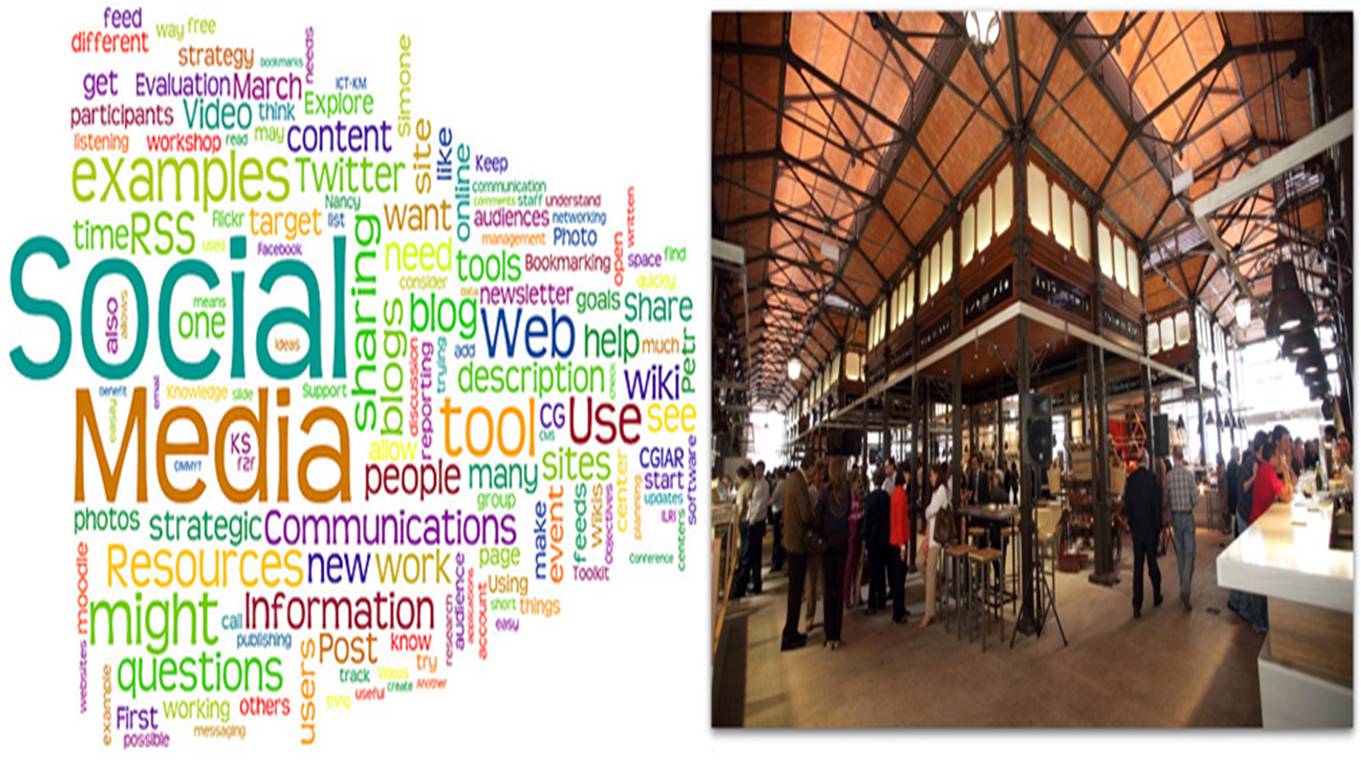
¿Es tan complejo Social Media? Pues a lo mejor no lo es tanto. Una imagen vale más que mil palabras. Este video lo explica de forma muy, muy sencillita.

¿Tienes algo que contar en la pizarrita? Yo creo que sí. Y mucho. Una buena parte de tus contactos, de tus compradores, de tus prescriptores, de tus consumidores finales están deseando ver lo que pones, para responderte y decirte lo que piensan de tus productos, de lo que «tú» cuentas. 

Fuente de foto: puntotic.com, jzlazul.blogspot.com

Comunicación digital del vino en España y en el mundo anglosajónDigital Communication in the spanish wine industry. In the english wine industry.

Es sorprendente la diferencia que hay entre el social media en el mundo del vino de habla inglesa del de habla española.

Hay una distancia sideral, pero lo curioso es que hay una cosa que es incuestionable, y que es que lo que está ocurriendo allí ocurrirá también aquí.

Alguien decía hace un tiempo en Twitter que el sector del vino no cree en el Social media y yo respondía que puede que las bodegas no crean en ello pero quien sí cree es el consumidor. Y esto deja un campo precioso para aquellas bodegas emprendedoras que tengan el valor (ya no es valor, es ojo) para dar el salto.

Pero… ¿Queremos números?.

Hace pocos días se celebró una de las ferias más importantes del mundo del vino en España, Fenavin, y a un buen amigo, Jesús Benito le encargaron organizar una charla sobre el 2.0. Se llamó Fenavin 2.0. La sala estaba bastante concurrida, pero era porque previamente iba a haber una entrega de premios. Cuando se dieron los premios mucha gente salió a tropel, y quedaríamos 20 ó 25 personas atendiendo a la charla. Preguntaron que cuantas bodegas había detrás de esas 25 personas. Había muy poquitas bodegas. Por cierto, el contenido de la charla y de los ponentes, muy bueno. Enhorabuena a Jesús Benito por la organización del mismo. Salió redondo.

Esta misma semana está habiendo en Londres la London Wine Fair una conferencia en la que también se habla de comercio electrónico en el mundo del vino. La entrada a esta ponencia específica, aparte de la entrada al recinto ferial es de 150 libras por persona con un tope de 200 personas. Bueno, pues al cabo de muy poco tiempo cerraron el cupo de entradas por internet, por lo que supongo que lo que hubo fue un llenazo.

Yo no sé qué conclusiones sacan mis lectores pero yo no tengo ninguna duda del efecto que tiene el social media en cuanto a visibilidad y ventas. Esto va a venir, y va a venir muy pronto, y a la mayor parte de las bodegas las va a pillar con el pie cambiado. En el mundo de habla inglesa hay una efervescencia enorme. Y en España parece  que hay aún un desierto. Tiempo al tiempo. Muy, muy poco tiempo al tiempo.

Este post en inglés: Digital Communication in the spanish wine industry. In the english wine industry.

It´s amazing the difference between social media on the English speaking wine sector, if compared with Spanish speaking wine sector.

There is a huge distance. Bu there is something that is unquestionable. What is happening there will happen here too.

Someone said a few days ago in Twittter that the wine industry does not believe in Social Media. My answer to this tweet was that it is not important if wineries do not believe. What is important is that many consumers do. These two factors altogether mean  there is a huge potential for entepreneur wineries that are brave enough (Are they only brave or have they also the knowledge?), to make the leap.

But… Do we want facts?

A few days ago, Fenavin, one of the most important Spanish wine fairs took place in Ciudad Real. A good friend of mine,  Jesús Benito, was responsible of making a conference during the fair about 2.0 which was called  Fenavin 2.0. In the beginning, the room was crowded, but as soon as they gave some prizes for important players on the wine industry, most of the people left. Only 20 or 25 people stayed for the “true conference”. Very few wineries.

By the way. Y have to say that the speakers and their conferences were at premium level. Congratulations to Jesus Benito for organizing it so well. Everything was fine.

This same week the London Wine Fair took place. On this fair there was also a conference about electronic commerce. The ticket for getting in was 150 pounds per person, with a maximum of 200 people. They had closed he ticket allocations on the internet several days before the event. Y guess there was a full assistance.

I do not know what conclusions my readers do take about this. I have no doubt about the importance of what Social Media has in order get visibility and sales. This is coming also to Spain very soon, and many wineries are not going to be well prepared for this.

In the English speaking world there is a great excitement. And in Spain, at the same time it looks as we were in the middle of the desert. Let us give time to my prediction. But not too much. It is coming soon.

This post in Spanish: Comunicación digital del vino en España y en el mundo anglosajón

Cuenta tu historia. Y escucha como suena.Tell your own story and hear how it sounds

Cuenta tu historia y escucha como suena

Publicado en Mercados del Vino y la Distribución en su número 65 de 15 de mayo a 15 de junio de 2011

Según pasa el tiempo y con las nuevas tecnologías, parece que todo se complica más, o quizás sea todo lo contrario, que se simplifica.

En realidad son las dos cosas. Se simplifica porque las herramientas de marketing se han hecho mucho menos sofisticadas y más baratas. Eso permite a muchas bodegas acceder a un tipo de comunicación que antes ni se planteaban. Las bodegas se centraban en elaborar un buen vino, se amparaban en su denominación de origen (las que podían), diseñaban una etiqueta, un envase, un embalaje, mandaban el producto a los grandes prescriptores para que valoraran su vino en puntos, participaban en concursos, hacían degustaciones, participaban en ferias, visitaban y vendían a determinados clientes. Y hecho todo lo anterior (que era mucho), esperaban a que compradores de distintas procedencias vinieran  a comprárselo a la Bodega. Con los medios económicos y humanos existentes era imposible hacer más

Pero adaptarse a los procesos de cambio y poder ser partícipe más proactivo en la generación de imagen de marca y en la venta, siendo una ventaja reviste al mismo tiempo una mayor complejidad. Hay que definir un mensaje, dirigirse a muy distintos tipos de interlocutor. Permite a los viticultores avispados disponer de una ventaja comparativa mayor. Permite también a los elaboradores de vinos con personalidad encontrar su hueco en el mercado. Les permite realizar un marketing del Vino que antes no realizaban.  Aquellos que sepan aplicar las nuevas tecnologías a su comunicación pegarán un salto sustancial respecto de sus competidores.

Antes la cosa iba de que unos bodegueros iban de seguir al pié de la letra lo que marcaban los grandes prescriptores. Y había otros bodegueros que no querían escuchar a nadie y elaboraban el vino que les salía del corazón, sin escuchar a nadie. Y se exponían a tener serias dificultades en la comercialización de su vino

Cuenta tu historia y escucha como suena 2.jpg

 El mundo actual permite a las bodegas ser más independientes de los grandes prescriptores, escuchar a los consumidores finales y otras muchas voces, seguir sus propios gustos, pero teniendo en cuenta las necesidades y gustos de los consumidores.

Dicen que Van Gogh se murió miserablemente porque nadie entendía su arte. ¿Quién era nadie? Los pocos que podían acceder a su obra en su época. Ahora la posibilidad de que un Van Gogh se muera de hambre es infinitamente más pequeña.

¿Quieres ser libre de elaborar el vino que te sale del corazón? ¿Quieres buscar a quien le puede gustar lo que tú haces? Ahora puedes hacerlo con Internet. Internet tampoco te da garantías de que puedas venderlo. Pero la probabilidad de que lo consigas es infinitamente superior. Y si lo consigues obtienes una satisfacción también mayor. Porque ante el dilema de ganarse la vida o ser fiel a los principios de uno se puede abrir un debate muy grande en el que habrán opiniones muy diferentes. Pero si existe la opción de ganarse la vida y ser fiel a uno mismo, no hay debate.

¿Tú crees que puedes estar al margen de lo que se opina de tu vino? ¿Tú crees que te puedes permitir el lujo de no contar tu versión de por qué haces las cosas como las haces? ¿Quién sabrá mejor que tú por qué haces lo que haces? ¿Tú crees que habrá alguien que pueda contar tu historia mejor de lo que tú lo haces?

Ponte las pilas. Ponte a contar tu historia. Ponte a escuchar cómo suena tu historia. Y saca tus conclusiones.

Fuente de imagen:  taringa.net  mariamsaraith.blogspot.com

Este post en inglés: Tell your own story and hear how it sounds

Cuenta tu historia y escucha como suena

Posted in Mercados del Vino y la Distribución in the 65th, May 15th to June 15th, 2011

As times passes and new technologies are put to use, it seems as if everything gets more complex. Or perhaps it is just the opposite? That everything becomes easier?

Actually both things happen. Things become easier because the marketing tools are becoming more user friendly and cheaper. This allows many wineries access to a type of communication that they could not have imagined only a few years earlier.

Wineries used to focus on developing a good wine – sheltered by their origin – designing a label, a package, etc. They sent the product to the major prescribers to rate their wine by points, they participated in contests, did tastings and participated in wine fairs. They visited and sold directly to certain customers. Once they had done all of this (which was a lot), they would wait for buyers with different backgrounds to come and buy from the winery. With the financial and human resources it was impossible to do more.

Adapting to changing processes and being more proactive in generating and selling the brand creates competitive advantages, but it also adds greater complexity.

You must define a message and communicate to many different type of people, but doing so enables clever winemakers to create competitive advantages. It also allows winemakers with personality to find their niche in the market. It allows them to make and execute a wine Marketing Strategy that they did not have before. Those who can apply new technologies to their communication can make a great leap over their competitors.

Earlier, the name of the game was that the winemakers would follow the best prescribers. Other winemakers would not listen to anyone, but would just make wine out of the heart. They risked having serious difficulties marketing their wine.

Cuenta tu historia y escucha como suena 2.jpg

Today´s world allows wineries to be more independent of the major prescribers. It allows them to listen to final consumers and many other voices, to follow their own tastes while taking the needs and tastes of consumers into account.

They say that Van Gogh died in misery because nobody understood his art. Who is nobody? The few who had access to his work at the time? Now the possibility of a Van Gogh starving is infinitely smaller. Search for the people who like what you do? Now, you can. Internet gives no guarantee that you can sell, but the probability you get it is infinitely superior. And you get a much greater satisfaction.  The dilemma of making a living or being faithful to the principles of an open debate can be difficult, but if you have the option of earning a living and be true to yourself at the same, then there is no debate.

Do you want to be free to make the wine that comes directly from your heart?

¿Do you think you can separate yourself from what they think and what they say about your wine? Do you think you can afford not to tell your version of why you do things the way you do? Who knows better than you why you do what you do? Do you think there will be anybody who can tell your story better than you can?

Be brave. Tell your story. Hear how it sounds. And draw your conclusions.

This image comes from: taringa.net mariamsaraith.blogspot.com

This post in Spanish:  Cuenta tu historia. Y escucha como suena.

En Social Media (Internet) para ser más efectivo en el mundo real.In Social Media (Internet) to be more effective in the real world.

Social Media. Mundo real.png

 
En el mundo del vino, cuando se recibe información sobre los Social Media y lo que esta herramienta puede hacer por ellos, la idea inicial que se saca es que lo que se propone un sustitutivo de las actividades presenciales. Yo personalmente creo que no es así, sino todo lo contrario. Se trata de un complemento por dos motivos:

1)      Las redes sociales e Internet pueden ser un filtro y un canal tremendamente poderoso para comunicar algo y para encontrar personas con determinadas afinidades. Uno, por determinadas circunstancias conoce a través de la red a determinadas personas, y de ese contacto, en función del interés, surge el intentar conocerse en persona. En otros casos, uno conoce a alguien en persona y mantiene la relación posteriormente vía internet.

2)      Hay cosas en las que lo presencial es mejor que internet y Social Media. Básicamente se centran en la capacidad de captar la atención de una audiencia, la capacidad de transmitir emociones y la experiencia que tenemos los hombres de relacionarnos unos con otros que data ya de miles de años. Esa experiencia nos permite saber en los primeros dos minutos de conversación si la persona que tenemos delante nos gusta, si estaríamos dispuestos a conocerla más a fondo y si llegaríamos a considerar hacer transacciones comerciales con ella.

Las nuevas tecnologías por donde primero han trabajado ha sido en intentar igualar la experiencia presencial y en acentuar lo que Internet mejora en la comunicación respecto de las anteriores maneras de comunicar. Han mejorado un montón en ambis aspectos  pero probablemente nunca llegarán a suplir en su totalidad a lo que aporta lo presencial.

Los primeros que reconocen que Internet aporta mucho, pero no todo, son los propios internautas, que se apuntan a muchos de los eventos y conferencias presenciales que hay en la actualidad en referencia al tema porque saben que van a recibir una información de forma distinta a la que reciben de forma virtual, y porque les permite interactuar presencialmente con otros internautas.

Hay dos mundos, que aún no están muy cerca, la de aquellos que no ven más que la tecnología y que todas las soluciones tienen que venir de la mano de la tecnología, y que, de alguna manera, casi diría que desprecian cualquier tipo de comunicación que no tenga que ver con la tecnología. Y un segundo mundo en el que están aquellos que viven en el mundo convencional, que las nuevas tecnologías les suenan a chino y que se asustan cada vez que se les acerca un freaky a ponerle la cabeza como un bombo.

El mundo no es ni una cosa ni la otra, sino una combinación de las dos, y gradualmente van apareciendo más y más personas que disfrutan de ambos mundos.  

Para que esto vaya más deprisa tiene que haber un mayor trasvase de gente a esa zona mixta, y agencias que propongan tanto soluciones de tipo convencional como soluciones de tipo digital. Porque lo digital no está reñido con lo convencional, y la gente, con el tiempo aplicará ambas cosas teniendo en cuenta simplemente su efectividad, su capacidad y su voluntad de adaptarse a los cambios que proponen esas nuevas tecnologías.

Lo digital no es mejor que lo convencional, como ir en moto no es mejor que ir en bicicleta. Depende de lo que quieras hacer.

¿Qué tal si disfrutas de lo bueno que tienen ambos mundos?

Fuente de imagen: destinoespana.com

Este post en inglés: In Social Media (Internet) to be more effective in the real world.

Social Media. Mundo real.png

In the world of wine, when the information is known about Social Media and what this tool can do for them, the initial idea to be drawn from this is that it seems like a proposal to substitute the personal presence activities by the Social Media.  I personally do not think in that way, but quite the opposite. Both systems are complementary for two reasons:

1) Social network and Internet can be a filter and a tremendously powerful channel of communication, also a way of finding people with specific affinities. If someone, under certain circumstances gets acquainted with specific individuals through the network, and from those contacts, in function of their common interests, then the intention arises to meet with them personally. In another cases, if you meet someone in person, then you maintain afterwards the relationship via Internet.

2) There are situations were being personally present is better than Internet and Social Media. Basically what it means is that being in person, one has the ability to capture the attention of an audience, the ability to convey emotions and experience what men kind have been relating to each other from thousands of years . This experience allows us to know if we like a person in the first two minutes of conversation and if we are willing to learn more about that person and if we would consider doing business together.

At first, what new technologies have worked out, is in the way of trying to match them up with the personal presence way of activity, giving the emphasis in what Internet communications improves over those previous personal means of transferring information. New technologies have improved a lot, but will probably never fulfill and replace what brings the personal presence.

The first ones to recognize that Internet brings a lot but not everything are those Internet users who get together in many events and attend in person to conferences related to this subject. They are aware that the information received directly in person, is different from the information they would receive   virtually, because it gives a chance to interact personally with other internet users.

There are two kinds of worlds that still are not very close together:

Hay dos mundos, que aún no están muy cerca, la de aquellos que no ven más que la tecnología y que todas las soluciones tienen que venir de la mano de la tecnología, y que, de alguna manera, casi diría que desprecian cualquier tipo de comunicación que no tenga que ver con la tecnología. Y un segundo mundo en el que están aquellos que viven en el mundo convencional, que las nuevas tecnologías les suenan a chino y que se asustan cada vez que se les acerca un freaky a ponerle la cabeza como un bombo.

Those people who see nothing else but technology and think that all solutions have to come from the hands of technology. And a second world of those people who belong to the conventional way of living, in which the new technologies will  sound like Chinese to them and  they will feel  scared  every time they are being  approached by a freaky, who will end up putting their heads like nuts.

The world is neither one way nor the other, but a combination of the two, and with time, gradually will appear more and more people who enjoy both worlds.

To make this go faster, it has to be accomplished a greater transfer of people to the mixed zone. Agencies have to propose solutions both in the conventional and the digital way, in a full understanding that digital technology is not unable to coexist with the conventional way. After the passage of time, people will apply both systems by simply considering its effectiveness and bringing out their own ability and willingness to adapt themselves to the proposed changes suggested by the new technologies.

The digital approach is not better than the conventional one. In a similar way, riding a motorbike is no better than cycling, it all depends on what you want do.

How about if you enjoy the good things that have both worlds?

This image comes from: destinoespana.com

Thi post in Spanish: En Social Media (Internet) para ser más efectivo en el mundo real.