Aprendamos de los hermanos Marx. Probemos, probemos.Much to learn from the Marx Brothers. Let us test. Again and again.

Mi vida con Groucho

Me he agenciado el libro sobre la vida de Groucho Marx escrito por su hijo Arthur Marx.

Y me lo estoy pasando pipa. Pero pipa, pipa. Porque tengo un recuerdo de las películas de los hermanos Marx como las más desternillantes de la historia del cine.

Me está pasando con este libro que me voy riendo solo. Y si leo en un sitio público supongo que la gente debe pensar que me he vuelto loco. Pues no. No me he vuelto loco, o no más de lo que estaba antes de empezar el libro.

Lo que me ocurre con el libro es que compruebo con el libro que este hombre Groucho Marx, no es que fuera divertido en las películas, es que era igual fuera de las películas. Un tipo divertidísimo que hacía las delicias de cuantos le rodeaban. No tanto de su mujer, y es que el hombre no era perfecto y su humor era algo machista, mucho más si consideramos que lo hacía en los años 30.

En un determinado momento empiezan a hacer películas para las grandes productoras de cine. Y tienen la suerte de encontrarse con Irving Thalberg. Los Hermanos Marx llevaban muchos años representando en salas de teatro su humor disparatado. Y estaban acostumbrados a trabajar con guionistas que creaban un guión. Se iban por distintos teatros, para, después de haber probado en muy distintos ambientes el guión, de haber pulido todo su discurso, hasta que llegaban a Broadway. Entonces la obra había cambiado tanto que ni tan siquiera los mismos guionistas reconocían casi una palabra de lo que previamente habían escrito.

Cuando los Hermanos Marx se ponen a trabajar en el mundo del cine convencen a Thalberg en cuanto a trabajar con sus propios guionistas y seguir con la tónica que habían hecho durante tantos años. Primero, un guión, luego salir de gira con las ideas principales de la película para ir viendo, con las reacciones del público cuáles eran los gags que funcionaban mejor, para hacer los retoques necesarios en el momento de la filmación y el montaje. Así se hizo en “Una noche en la Opera” (memorable) y alguna más. Murió Thalberg y los estudios de Hollywood trataron de meter en cintura a los Hermanos, eliminando este método de prueba y error. De alguna manera se cargaron la gallina de los huevos de oro, porque los Hermanos Marx nunca volvieron a ser los mismos en el mundo del cine.

El éxito de los Hermanos Marx provenía de un trabajo planificado previamente que se iba puliendo mediante la prueba y error, y todo lo que se hacía en sus películas que parecía tan espontáneo provenía de haberlo probado decenas de veces.

Yo no sé cómo se hacen las pelis actualmente.  Creo que no siguen ese proceso, aunque, recientemente determinadas productoras están aprovechando los Social Media para detectar qué es lo que va a funcionar en los guiones y lo que no.

Se ha hablado de las múltiples ventajas que aportan los Social Media y casi nunca se menciona la probabilidad de probar previamente cualquier idea. Que probar directamente a través de este medio es infinitamente más fiable y barato que cualquier estudio de mercado realizado con las tecnologías usadas previamente. Aunque solo fuera por esto merecería la pena entrar en Social Media.

Hagamos caso a los Hermanos Marx. Seamos valientes y probemos, probemos. Aprendamos de nuestros errores.

Imagen de: bibliotecanestor.blogspot.com

Este post en inglés: Much to learn from the Marx Brothers. Let us test. Again and again.

Mi vida con Groucho

I bought the book on Groucho Marx’s life written by his son, Arthur Marx.

And I’m having a great time –a really great time because I have good memories of the Marx brothers’ films as the most hilarious in the history of cinema.

 This book is making me laugh a lot, and if I read it in a public place I guess people must think I’ve gone crazy. Not really. I have not gone mad, or no more than I was before starting the book.

This book is making me understand that this man, Groucho Marx, not only was a funny person in his films, but also was he in real life –a funny guy that amused those around him. Not so his wife, as that man was not perfect and his sexist humour was very strong even if we consider than it was done in the 30’s.

At some point they start making movies for majors filmmakers. And they were lucky to meet Irving Thalberg. The Marx Brothers had spent many years representing their crazy sense of humour in theatres. And they were accustomed to working with scriptwriters. They would go to different theatres trying a script in many different environments and polishing the whole scene until reaching Broadway. In the meanwhile the work changed so much that not even the writers themselves recognized almost a word of what they had initially written.

 When the Marx Brothers put their work in the cinema world, they managed to convince Thalberg to work with their own writers and continue the trend that had worked for so many years. First, a script, then go on tour with the main ideas of the film to measure the reactions of the audience and analyze which jokes work better in order to make the necessary alterations in the time of filming and editing. This was done in «Night at the Opera» (memorable) and some more. Thalberg died and Hollywood studios tried to discipline the Brothers by eliminating the trial and error process. In some way, they killed the goose that laid the golden eggs, because the Marx Brothers would never be the same in the world of cinema.

The Marx Brothers’ success came from a previously planned work that would be refined through trial and error. All sketches that seemed spontaneous in their films were just the result of many rehearsals while touring around.

 I do not know how films are made nowadays. I think they do not follow this process, although recently some producers are taking about the advantages of Social Media to detect what is going to work on scripts and what not.

 We have talked about the many advantages provided by the Social Media and we hardly ever mention the probability of pre-testing an idea. Testing and trying directly through this procedure is infinitely more reliable and cheaper than any market research carried out with the technologies previously used. This single reason makes it worthwhile to enter Social Media.

Let us follow the Marx Brothers. Let us be brave and try and try. Let us learn from our mistakes.

Imagen de: bibliotecanestor.blogspot.com

This post in Spanish: Aprendamos de los hermanos Marx. Probemos, probemos.

La clave está en diferenciarse y en algo más.The key is to look different… and something else.

Donde está Wally?

Dónde está Wally

Publicado en Mercados del Vino y la Distribución en su ejemplar nº 60 del 15 de diciembre de 2010 al 15 de enero de 2011

Es el momento actual un momento terrible. Estamos en una crisis muy profunda en la que todo es inestable. Nada es seguro.

Es el momento actual un momento apasionante, porque estamos viviendo los tiempos de cambio más profundos de la historia. Y en los tiempos de cambio, surgen grandes oportunidades para quien sabe identificarlas.

En el pasado también ha habido momentos de cambio importantes en el sector del vino. Hace ya un tiempo, con miles de bodegas en España y en el mundo, la necesidad de que este sector se organizara era una prioridad. Y aparecieron las Guías de Vino por todos conocidas. Jugaron un papel trascendental para objetivar la calidad. Con ello los compradores, a muy distintos niveles, tenían mayores garantías de poder revender los productos que compraban. Lo conseguían siguiendo las valoraciones de las mencionadas guías. Este simple hecho provocó un aumento exponencial de las exportaciones. Pero también provocó una pérdida de heterogeneidad entre los distintos vinos al verse de alguna manera obligadas a seguir sus pautas de valoración.

Con la aparición de Internet y los Social Media aparecen nuevos líderes de tendencias y gustos con criterios muy diversos, cuya fuerza consiste en el número de seguidores que les leen por la red y por la reputación que se van ganando día a día.

Si antes eran contados los que dictaban el criterio de valoración del vino, ahora son muchos más los que determinan el valor y la calidad de los vinos. Y la mayoría, con bastante menor influencia individual. Porque son muchos más. Porque sus seguidores ya no siguen a un único prescriptor, sino a muchos y todos están tan solo a un clic de distancia. Porque ese liderazgo es algo que varía con el tiempo. Las verdades absolutas sobre el mundo del vino desaparecen. Todo se hace mucho más complejo.

Además, actualmente las Bodegas pueden entrar en contacto con los consumidores finales, y contarles con detalle sus peculiaridades, y entender, de primera mano sus gustos.

No es necesario entender el proceso completo para tener éxito en esta nueva situación. Lo que es necesario entender es qué cosas concretas funcionan.

Y las verdades del barquero son, por encima de muchas otras en este momento… apostar por la calidad, diferenciarse, acometer nuevos proyectos, tener personalidad, transmitir al mercado estos factores, buscar nuevos mercados, utilizar las nuevas tecnologías e internet, tener un contacto directo con los clientes finales para contarles tu singularidad y por entender de primera mano cómo reciben los clientes nuestros productos, cuáles son sus preferencias.

Hay una frase de Darwin que me viene como anillo al dedo que dice: “Sobrevivirán, no los más fuertes ni los más inteligentes sino aquellos que sepan adaptarse mejor a los cambios” Nos encontramos en el momento de mayor cambio de la historia. ¿Tú qué estás haciendo para adaptarte a los cambios?

La clave está en diferenciarse

Fuente de imagen: docencia.izt.uam.mx

Este post en inglés:  The key is to look different… and something else.

Where is Wally?

Dónde está Wally

Published in Mercados del Vino y la Distribución  nº 60 from december 15th, 2010 to january 15 th 2011

It is a terrible moment in time. We are going through a deep crisis in which everything is unstable and nothing is safe.

However, it is at the same time an exciting moment because we are living in a period of history in which changes are to be major. And in times of change, there are great opportunities for those who are able to identify them.

In the past there have been important turning points in the wine sector. Some time ago, with thousands of wineries in Spain and worldwide, the need to organize this sector was a priority. And Wine Guides known to all appeared to play a vital role in making a subjective concept as quality into something objective. With such guides, all buyers were more certain of being able to resell the goods they bought. They could do it following the ratings of the above guidelines. This fact alone caused an exponential increase in exports. But it also caused a loss of heterogeneity among the different wines to be somehow forced to follow their guidelines in assessment.

 With the advent of Internet and Social Media there are new trends and wine tasting leaders with widely varying criteria, whose strength lies in the number of followers reading their entries over the network and the reputation gained every day.

 Where once there were few who dictated the criteria for wine assessment, now there are many more who determine the value and quality of wines. And most of them with far less individual influence. Because there are many more. Because followers follow no longer a single prescriber, but many, and they are all just a click away. Because that leadership is something that varies with time. The absolute truths about the world of wine disappear. Everything becomes much more complex.

In addition, the wineries can now contact with end consumers and tell them in detail their characteristics, and understand their tastes at first hand. It is not necessary to understand the whole process to succeed in this new situation. What is needed is to understand what specific things work.

 And the essential truths are, above many others in this moment … commitment to quality, differentiation, undertake new projects, have personality, the way these factors convey to the market, find new markets, using new technologies and the Internet, having direct contact with end customers to tell your uniqueness and understand first-hand how customers receive our products and what are their preferences.

Darwin has a phrase that comes to my mind that says, «not the strongest nor the most intelligent will survive, but those who can best adapt to change» At the moment, we are going through the greatest change in history. What are you doing to adapt to these changes?

La clave está en diferenciarse

This image comes from: docencia.izt.uam.mx

This post in Spanish: La clave está en diferenciarse y en algo más.


¿Colaborar o competir?Collaborate or compete?


Trainera

De esto hablaba hace un tiempo en un post. Me ha dado por recuperar posts que escribí en 2008. Es una sensación fantástica. Porque me da la sensación de que volvería a escribir esos posts de la misma manera, solo que con la letra mucho, mucho más grande, porque si antes creía en esas ideas a un nivel de 100, ahora creo 200.

Hablaba de colaborar. Estamos en la etapa en la que es más necesaria y fructífera la colaboración, porque las nuevas tecnologías permiten a pequeñas empresas o profesionales individuales ser más competitivos, porque internet nos acerca a todos. Nos permite mejorar al vecino  y que el vecino nos mejore a nosotros. Porque puedo dar un enorme valor añadido a un coste muy bajo, y lo mismo le ocurre a mi vecino.  La suma de 1 +1 nunca fue 2. Era 3. Pero, ahora, con las nuevas tecnologías, ya no es 3, sino 6, 7, 10, 15…   

A mí las nuevas tecnologías me ponen. Me ponen, pero mucho. Compruebo que se está dando un proceso de cambio cada vez más acelerado. En los procesos de cambio surgen nuevas oportunidades, y las nuevas tecnologías aportan gran parte de esas nuevas oportunidades de múltiples maneras. Pero me doy cuenta de que tengo que correr como un poseso para no quedarme atrás.

Hace unos años cayó en mis manos el libro “La Tierra es Plana”. El libro es una auténtica joya, muy recomendable de leer aún con el paso del tiempo.

Dentro del libro hay un párrafo inolvidable. Según cuentan en el libro está colgada en el centro de trabajo de una empresa india bastante integrada en el proceso de cambio. Dice:

“Cada mañana en Africa se despierta una gacela. Sabe que tiene que correr más rápido que el león más veloz, si no quiere que la mate. Cada mañana se despierta un león. Sabe que tiene que ganar a la gacela más lenta si no quiere morir de hambre. Da igual que seas león o gacela. Cuando salga el sol, más te vale empezar a correr”.

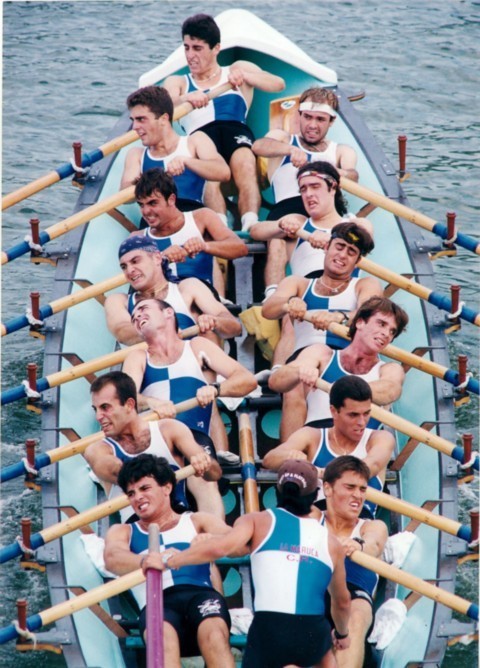
 Para correr de esa manera aparte de correr como un desesperado y procurar no tropezarte demasiado,  una de las maneras más inteligentes de hacerlo es colaborando. Si yo tengo una moto por qué no hacerte sitio para que te subas en ella (¿pierdo velocidad con ello?), y que me ayudes, no sé si con el aceite, comprando los neumáticos, o haciéndome sitio en tu coche cuando llegue el caso.

Decía Guy Kawasaki en su ponencia de Ficod 2010 (en inglés) (en español)( si no le visteis yo no me perdería ni una coma)  que la actitud de las personas en este momento debería ser la de transmitir que responderías sí a lo que te pidan. Y decir sí, porque uno tiene la convicción de que el de enfrente te diría sí también en la misma situación. ¿Bonito el juego no?

Yo busco 10, 25, 100… personas a las que dar. ¿Qué porcentaje de ellas estarán dispuestas a jugar al juego de la reciprocidad potencial? Mientras ese porcentaje no sea cero, la fórmula funciona.  

Esto que digo está muy extendido por Internet. Todo el mundo lo entiende a nivel teórico. Hasta que existe la posibilidad de ganar un euro. Cuando sale un euro para ganar, la gente se vuelve loca, y si antes decían (decíamos), sí, hay que colaborar, empiezan (empezamos) a decir: el euro para mí.

Y cuando uno lo mira con la distancia y objetividad, sabe que lo importante es hacer crecer la tarta y no pegarse desde el minuto uno por los ingresos. ¿Es inevitable? Ocurre en la creación de Facebook y en la lechería de la esquina. Ocurre también que todos tenemos un apartamento, un colegio de los niños, una comida que pagar.

Recuerdo el chiste. Un niño que dice a su padre: “Papá. En el colegio me llaman egoísta” y dice su padre. “Pues una mierda para ellos”. Y salta el niño, “No papá. Una mierda para ellos, no…. Para mí, para mí, para mí…

Colaborar, empujar, compartir conocimiento.  Quiero hacerlo más y más, pero porque aunque no soy más altruista que otros, por encima de todo… no quiero quedarme atrás.


Fuente de Imagen: pobladores.com/

Este post en inglés: Collaborate or compete? 

Trainera

I spoke about this fact some time ago in a post (In Spanish). Nowadays, I am reading posts I wrote and it’s a fantastic experience. I get the feeling I would re-write those posts in the same way I did, only in a much bolder font, because if I once believed in those ideas to a level of 100, now I think I believe to a level of 200.

 I spoke of collaborating. We are at the stage where collaboration is most necessary and fruitful, as new technologies allow small companies or individual entrepreneurs to be more competitive because the Internet brings us all together. It allows us to improve our neighbour and lets that neighbour improve us. Because I can provide tremendous value at a very low cost, and so does my neighbour. The sum of 1 + 1 never was 2 –it was 3. But now, with new technologies, it is not 3 but 6, 7, 10, 15 …

I personally trust new technologies. I am very much excited about them. I note that it is undergoing a process of increasingly rapid change. Change processes result in new opportunities, and new technologies provide many of these new opportunities in multiple ways. But I realize I have to run like mad to keep up.

 A few years ago I came across the book » The World is Flat «. This book is a gem, highly recommended to re-read even at some other point in the future.

The book offers us an unforgettable paragraph. As told in the book –set at a workplace of an Indian company quite integrated into the process of change:

 «Every morning in Africa a gazelle wakes up. She knows she must run faster than the fastest lion, otherwise she will die. Every morning a lion wakes up. He knows he has to beat the slowest gazelle if he does not want to starve. Whether you are a lion or a gazelle, when the sun comes up, you better start running.»

Running like a madman trying not to stumble too much does not seem to be the smartest way to get to the final destination. Collaboration is indeed the best option. If I have a motorbike why not make room for you on it (does it really stop me from going faster?). In exchange, you may help me with the oil, buy tires, or make room for me in your car at some point in the future if necessary.

 Guy Kawasaki said in his presentation at Ficod 2010  (if you have not seen that, I would not miss any detail) that it should be a common attitude nowadays to convey that you would respond yes to anything requested. This yes is backed by the feeling the person in front of you would also say yes in the same situation; nice game, isn’t it? 

I am looking for 10, 25 or 100 people to whom I can give. What percentage of them will be willing to play the game of potential reciprocity? While that percentage is not zero, the formula works.

 What I say is rampant on the Internet. Everybody understands this at a theoretical level, until there is a chance to win a Euro or two. When you get a Euro to gain, people go crazy, and if before they said (we said) “yes, we must work together”; now we tend to say “that Euro is for me”.

And when one looks from the distance and objectivity, you know that the important thing is to let the cake rise and do not get stuck thinking about revenue. Is it inevitable? It occurs in the creation of Facebook and at the grocery store down the corner. It also happens to be that we all have an apartment, a children’s school, a meal to pay.

 I remember the joke. A boy tells his father: «Dad. At school they call me selfish.» And his father said: «Well, sucks for them.» And the boy replies, «No dad. Sucks for them, no … For me, for me, for me …

Collaborate, push, share knowledge. I want to do this more and more. Although I do not consider myself to be more altruistic than others, above all … I do not want to fall behind.

The image comes from: pobladores.com/

This post in Spanish: ¿Colaborar o competir?


Facebook acelera en España. Crear y medir campañas en FacebookFacebook accelerates in Spain. Creating and measuring campaigns on Facebook.

Audio y video de la reunión de diciembre del Conversion Thursday en Madrid. En este caso el título de la ponencia era: Crear y medir campañas en Facebook

En este caso de ponentes estaban Sergio Maldonado y Javier Godoy.

¿Y por qué digo que acelera Facebook?

Por el contenido de la ponencia (oir audio), por el ambientazo que había en el auditorio del EOI (lleno hasta la bandera), por los comentarios del público presente (empieza a haber un discurso distinto), y porque lo dicen los ponentes en sus blogs. Las tres capas del Marketing en redes sociales

Este post en inglés: Facebook accelerates in Spain. Creating and measuring campaigns on Facebook.

Audio and video of the December meeting of Conversion Thursday in Madrid. In this case the title of the lecture was: Creating and Measuring Campaigns on Facebook.

The speakers were Sergio Maldonado y Javier Godoy.

Why do I say that Facebook is accelerating?

There are several reasons to this: the content of the paper (listen to the audio) (in Spanish), the atmosphere in which the meeting took place at the auditorium of the EOI (filled to the brim), the comments of the audience (a different discourse seems to be arising in the Spanish market), and the opinions of all participants in their own blogs. The three layers of Marketing on Social Networks. (in Spanish)


This post in Spanish: Facebook acelera en España. Crear y medir campañas en Facebook

Con los podcasters en el EBE 2010. (Evento Bloggers España)With podcasters in EBE 2010. (Evento Bloggers España)

Reunión de podcasters

En realidad no tenía intención de asistir a este encuentro. Simplemente coincidió. Entre las 3 alternativas que había para esa misma hora me parecía la opción más interesante.

El motivo más importante en realidad era que quería en su momento colgar un post con un audio y las pasé canutas para lograrlo. Y pretendía aprender para la próxima.

El caso es que allí estaba.

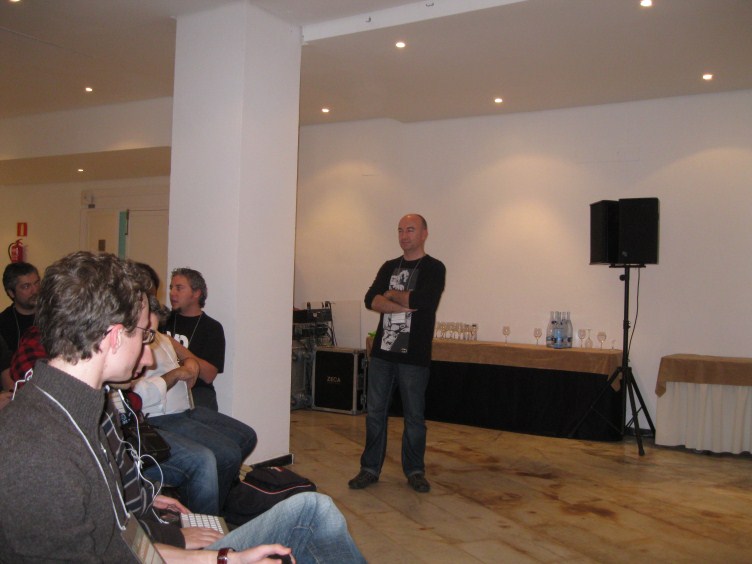
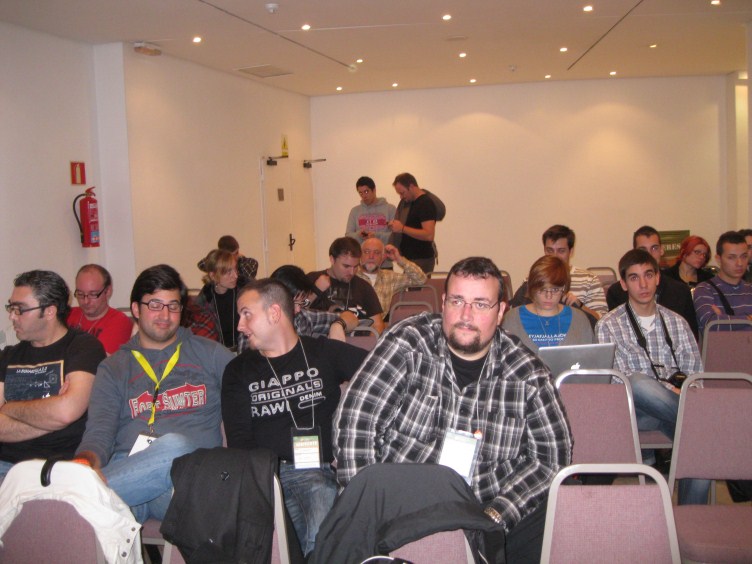
Y me he encontrado con una gente fantástica. Desde luego ha sido la conferencia más entretenida del EBE para mí. Son una gente muy divertida y muy sana. Ellos saben que son diferentes y hacen una piña.

Pero mejor oir lo que pasó en el encuentro a que os lo cuente yo.

Audio del evento de podcasters en el EBE 2010 

Una de las cosas más graciosas es cómo se presentaba cada uno:

Hola, soy Fulanito de Tal y yo …. soy oyente.

Otro que decía: … me llamo Menganito de Cual y…yo… lo he dejado…

Parecía que estaban reconociendo un pecado, un vicio inconfesable… Las carcajadas no paraban.

Vamos que me lo pasé pipa con ellos.

Hasta tal punto que decidí que tenía que hacer un post sobre esta gente. ¿Y cómo lo he bajado? Pues se lo debo a Javier Pérez de Pedro que me dedicó toda una tarde en ayudarme a bajarlo y a contarme todas las bondades que el podcasting tiene. Pero finalmente dicidí colgar lo que Javier ha colgado en el propio blog de la asociación podcast. Y es que Javier trabaja el medio mucho mejor que yo.

Yo ya le he dicho que no sé si lo voy a usar mucho, pero según han pasado los días me da la sensación de que el podcasting tiene mucho recorrido.

La sensación que tengo respecto a este nuevo medio para mí es similar a la que tuve cuando arranqué con los blogs escritos o a crear videos. Una nueva y distinta sensación de libertad. Pero el audio es un mundo aparte. Un mundo especial.

¿Y de qué temas hablan? Hablan de todo. Aquí os paso una relación de podcasts en emisión.

En el encuentro se habla de la presentación de un libro sobre cómo iniciarse en el podcast. Este es el post de la asociación en el que se habla del libro: “Podcasting, tú tienes la palabra”

Quiero que este post sea un pequeño homenaje a esta gente tan especial… y tan agradable.

Chapeau para los podcasters.

Reunión de podcasters 2

Este post en inglés: With podcasters on EBE 2010.

Reunión de podcasters

I had no intention to attend this meeting. It just happened. Among the 3 alternatives which were occuring at the same time, this seemed to be the most interesting option.

The most important reason was, in fact, that once I wanted to publish a post with audio and I had a tough time to get it done. For this reason I wanted to learn how to do it for next time.

And there I was.

And I found very amazing people. In my oppinion it has been more entertaining conference in EBE. Podcasters are very interesting and funny people. They know they are different and for that reason they make a very integrated group.

But better to hear what happened at the meeting, to tell you what I did. (in Spanish)

Audio of podcasters event in the EBE 2010

One of the funniest thing is how each person presented himself:

Hi, I’m John Smith and I …. I’m a listener.

Another saying … I am somebody’s niece and … I … I quit…

It sounded as if they recognized they have sinned, or done an unconfessable vice… Laughs did not stop.

In conclusion I had a great time with them.

So much so, that I decided I had to do a post about these people. And how did I get it down this time? Well, I owe to Javier Perez de Pedro who spent a whole afternoon to help me to download it and told me about all the benefits of what podcasting means.  I But finally decided what Javier had alreadyposted on the  asociación podcast blog. No doubt that Javier makes a much better job on this media.

I have told him I do not know if I will use it very often, but a few days later, I believe that podcasting has a long distance run.

My sensations are similar to when I started to create videos or writing blogs. A new and distinct sense of freedom. Podcasting is a different and special world.

And what do they talk about? They talk about everything. Here I pass a list of podcasts on the air. (in Spanish)

On the meeting I assisted, they mentioned about the presentation of a book on how to get started on podcasting. This is the post of the association which presents the book: “Podcasting, tú tienes la palabra” (Podcasting, you have the word) (in Spanish) 

I want this post to be a tribute to these people who are so special people… and so nice.
 
Cheers for podcasters.

Reunión de podcasters 2

 This post in Spanish: Con los podcasters en el EBE 2010.