Visita a El Lagar de IsillaA visit to El Lagar de Isilla

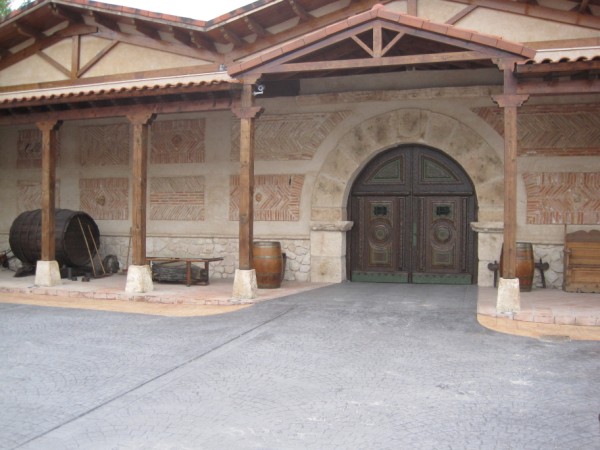
Entrada a Bodegas El Lagar de Isilla

El Lagar de Isilla ha sido un gran descubrimiento para mí.

Este proyecto lo he conocido por etapas. Primero conocí a una de las hijas de José Zapatero, propietario de la Bodega, en la presentación de Aranda de Duero. Le pregunté que qué cargo ocupaba en la Bodega. Me dijo que era la hija del dueño. Hizo una pequeña pausa y yo pensé que ser hijo del dueño no tenía mucho mérito. Pero arrancó de nuevo para explicarme la formación que tenía. ¡Apabullante!. A través de sus estudios y lo que posteriormente me contó me transmitió que por conocimiento no tenía a muchos que envidiar.

Luego visité el restaurante y la Bodega subterránea que tienen en Aranda de Duero. Las Bodegas subterráneas son una auténtica maravilla. Pero si encima tienes la suerte de que te las enseñe esta mujer, la experiencia se hace muchísimo más rica. Alguien que nos acompañaba tuvo el acierto de grabar en video la visita. Dos palabras. Im presionante. Pero lo que veáis en el video no es ni la mitad de la impresión que yo recibí en ese momento. Una imagen vale más que mil palabras dicen, pero mejor aún si tú formas parte de la película.
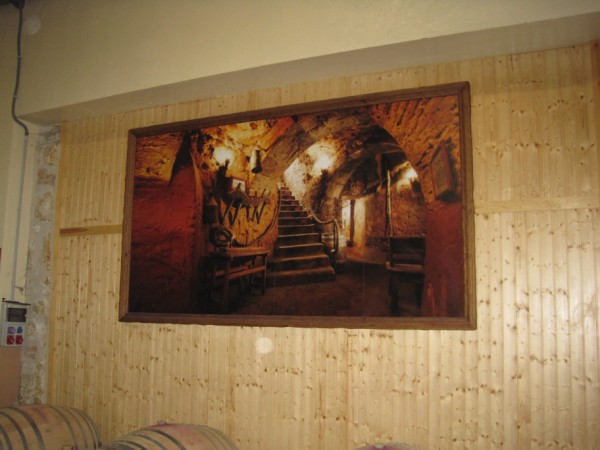
Imagen de El Lagar de Isilla en Aranda de Duero

Unos días más tarde comí en el restaurante. Había conocido a José Zapatero, alma máter del negocio, de pasada, la vez anterior. Le recordé de cuando nos habíamos conocido y el hombre se desvivió. Nos atendió fenomenal y nos invitó a un postre muy original a base de pimientos. Nos insistió en que fuéramos a visitar su bodega. En la bodega subterránea tiene alguna foto en la que se podía vislumbrar su encanto pero una foto es una foto. No me hice una gran composición de lugar.

¡Cómo será el restaurante, la ubicación del mismo y la bodega subterránea que considero un crimen visitar Aranda de Duero y no pasar por allí!

Pero es que posteriormente he visitado la Bodega. Y la Bodega no se queda atrás respecto de lo visto en Aranda de Duero

Se encuentra a unos 20 kilómetros de Aranda en una finca de estilo colonial de 1890, justo enfrente de un monasterio espectacular que me recordó desde lejos y por fuera, en pequeño, al Monasterio del Escorial. Me dicen que la visita al mismo merece la pena, pero teníamos la agenda muy apretada. Supongo que eso es lo bueno de los buenos viajes. Que siempre te quedas con ganas de ver cosas.
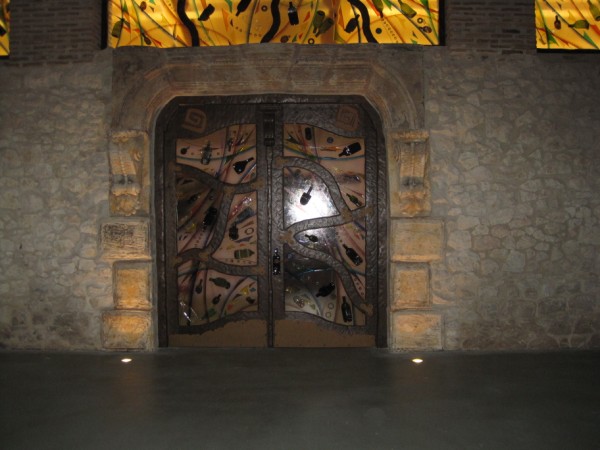
Vidrieras con botellas

Entramos en la tienda. Está decorada con muchísimo gusto. Una moto de la segunda guerra mundial tallada en madera domina la estancia.

Empezamos la visita. Todo está cuidado hasta el más mínimo detalle. La entrada, los portalones, el patio, los depósitos, las instalaciones en su conjunto. Muchos pequeños detalles hacen de la visita algo especial. Uno de esos detalles son las vidrieras en las que juegan con las botellas en plan decorativo.

La sala de barricas, impecable con una foto espectacular de su bodega subterránea en Aranda de Duero, las máquinas de envasado. Todo está cuidado hasta el más mínimo detalle.

Nos muestran la zona que queda por restaurar. Esto junto a alguna foto expuesta que enseña cómo estaban las instalaciones cuando se compraron, dan pistas sobre la visión de negocio que tiene José Zapatero y el enorme esfuerzo que esta familia ha hecho por acondicionar de esa forma tan especial su Bodega.
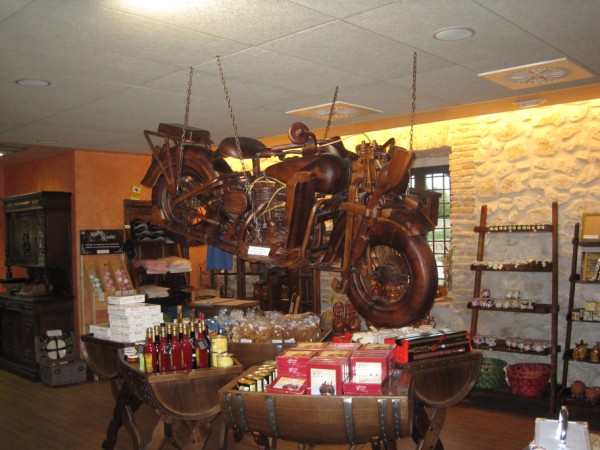
Moto de madera

En la zona por restaurar pretenden hacer un pequeño hotel. Con que le pongan el mismo gusto que le han puesto al resto de sus instalaciones el éxito es seguro.

Volvemos de nuevo a la tienda y entramos en la sala de catas. En ella una pantalla de plasma en el que se reproduce un video de unos pocos minutos en donde se muestra de forma atractiva la Bodega y los momentos más interesantes del año como son la recogida de la uva, el tratamiento de la misma para su transformación en vino, etc.

Pedimos hacer una cata completa. Ahí aparece un nuevo detalle. Cada copa va con su posavasos de un color que identifica y recuerda que cada uno de los productos de la Bodega tienen algo en común (su logo, muy bien trabajado por cierto) y algo que las diferencia, el color de cada una.

En la sala de catas podemos ver diversos premios conseguidos por los distintos vinos. Y también los premios que José Zapatero ha obtenido como experto catador. El mensaje es muy directo. Te están diciendo. Puede que te gusten nuestras instalaciones. O nuestros vinos. O los premios y las puntuaciones que Parker y Peñín dan a nuestros vinos. Pero además de hacer buenos vinos dicen que tenemos un paladar exquisito. ¿Te queda alguna duda sobre la calidad de nuestros vinos? No solo gana premios José sino su hija Pilar.
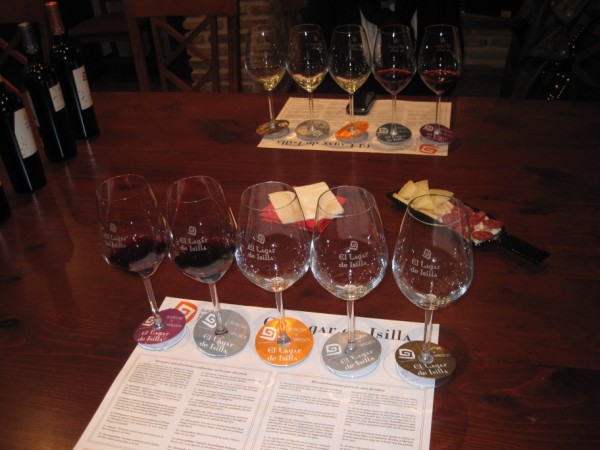
Posavasos

Y todo este negocio regentado por José Zapatero y sus dos hijas (que yo sepa), que aparte de saber de vinos hacen algo aún más importante. Se lo curran.

Y pregunto si están creciendo y me dicen que sí y de forma notable.

Saco una conclusión y es que pueden existir tiempos de crisis pero para los que saben hacer bien las cosas y se esmeran en hacerlo hay premio.

El Lagar de Isilla se merece premio. Y lo está teniendo.

Chapeau

PD: Me han hecho saber que en este proyecto hay otra persona fundamental en el éxito del mismo, a quien no tengo el gusto de conocer,  que es la madre de Beatriz y Pilar y mujer de José Zapatero. Sin ella este proyecto no sería lo que es. Vaya mi reconocimiento también para con ella.

Estos son los vinos que catamos: Rosado, Roble, Crianza, Reserva y Vendimia seleccionada

Este post en inglés: A visit to El Lagar de Isilla

Entrada a Bodegas El Lagar de Isilla

El Lagar de Isilla has been an amazing find for me.

I got to know this Project in stages. First I met Pilar, one of the owner’s daughters at the wine tasting in Aranda de Duero. I asked what job she did at the winery, and she replied that she was the owner’s daughter! She paused a bit and I was thinking that that’s not much of a job, but then she continued and told me all about her education and training, and I can assure you that its impressive.

Then I visited the restaurant and the underground caves/cellars on the main street of Aranda de Duero. The underground caves are absolutely amazing in their own right, but if you are lucky enough to be guided by Pilar the experience is even better. One of our group took a video while we were there. Two words describe my experience: Im pressive! The video of course doesn’t do it justice. An image may be worth a thousand words but it’s even better if you’re actually in the movie!

Imagen de El Lagar de Isilla en Aranda de Duero

A few days later I had a meal in the restaurant. I had met the owner, José Zapatero, alma mater of the business earlier. He remembered and attended us personally, and even invited us to a special desert, made from peppers. And he insisted on visiting the winery. There were a few photos of the winery hanging on the walls, but they don’t really give you an idea of what it’s like.

The restaurant itself, its location, the caves are such that I now consider it a crime to visit Aranda de Duero without going to El Lagar de Isilla.

The winery is just as impressive as the restaurant and caves.

It’s about 20 km from Aranda in a colonial style estate from the 1890’s, very close to a spectacular monastery which reminded me of a small version of El Escorial. I was told that it was worth seeing inside too, but we were pushed for time. That’s the good thing about these trips, you always end up wanting to see more and want to come back!

Vidrieras con botellas

First we went into the shop, which is very tastefully decorated. A wooden motorbike from the Second World War dominates the room.

The visit began; every detail has been thought out. The entrance, the gates, the patio, the vats, the machinery and installations in general. Many smaller details make the visit a pleasure. For example, the decorative play of bottles.

The barrel room is beautiful, and has a spectacular photograph of the underground caves in Aranda. Even the bottling line is shown off to good effect.

There is an area that has to be renovated, and there are photos of what it looked like before. It gives you an idea of José’s vision and business plans for the future. The whole family have made an enormous effort to restore and condition this amazing winery.

Moto de madera

They want to build a little hotel in this area. If they do it in the same style as they’ve done everything else so far, its success will be assured.

Back to the shop, and into the tasting room. There’s a large flat-screen TV on the wall showing a short video of the most interesting moments during the year in the vineyard and winery: grape harvest, crushing and pressing, etc.

We taste the entire range of wines. Another detail: each glass comes with its own little mat in a different colour, so as to help you remember the different wines; and they are printed with the winery’s logo (which is very well designed).

In the tasting room we could see all the different prizes that the wines have won, and the prizes that José himself has won, in his capacity as an expert wine-taster. The message is very direct. It’s saying, you may like our installations, or our wines, or the prizes and points awarded to us by Parker and Peñín; but apart from making good wine we are very open to perceiving good wine too. Have you got any doubt about the quality of our wines? Not only José wins prizes, but his daughter Pilar also does.

Posavasos

Their project is overwhelming!

It’s all run by José and his two daughters, who apart from knowing a lot about wine, also do something else, that’s even more important: they work hard!

I ask them if business is growing, and they reply that it is, and quite considerably.

I come to the conclusion that there may be times of recession, but for those who know to do things well and work hard at it, there’s a prize!

El Lagar de Isilla certainly deserves a prize. And they’re winning it!

Cheers!

PD: They have told me I should also mention Betariz and Pilar´s mother as a fundamental factor of the success in this project. I do not know her and this is the reason why I did not write about her. My appreciation also goes to her.

These are the wines we tasted: Rosado, Roble, Crianza, Reserva, and Vendimia seleccionada

This post in Spanish: Visita a El Lagar de Isilla
Bodegas Enguera en la Primera Feria Internacional del Vino EcológicoBodegas Enguera on the International Organic Wine Fair in Spain

La familia Pérez Pardo es originaria del Macizo del Caroig, zona agreste y muy montañosa, de profundos cortados y amplios valles y de muy antigua tradición vinícla.

Situada al Suroeste de la provincia de Valencia, se encuentra dentro de la subzona Clariano preteneciente a la Denominación de Origen Valencia.

La Bodega se funda en el año 1999 con el espíritu de crear una bodega de viñedos propios para así poder obtener buenos vinos a partir de un amplio trabajo que empieza en nuestra viña y acaba en la satisfacción del consumidor que degusta nuestros vinos.

En la actualidad Bodegas Enguera cuenta con 160 hectáreas de viñedos propios, repartidos en dos zonas muy concretas. La primera en el término municipal de Enguera con alrededor de 100 hectáreas, situadas en las fincas de Antolí, Bañona, Benali, Toñuna o Venta Corrales, por enumerar las más significativas.

Pedro, que representa a la última generación que se incopora a la bodega de su familia nos presenta Cotopardo Crianza 2007, Cañada Negra 2008, y Benali 2007:

Pedro también nos habla sobre las posibilidades de turismo enológico en su bodega y en la zona circundante:

Post relacionados:
Primera Feria Internacional de Vino Ecológico. Después del evento
Primera Feria Internacional del Vino Ecológico

Post en inglés: Bodegas Enguera on the International Organic Wine Fair in Spain

Texto extraído de la página web de Bodegas EngueraThe Perez-Pardo family comes from the Caroig Massif, a rugged, very mountainous area with deep ravines, broad valleys and a very long tradition of wine making.

It is located in the southwest of the province of Valencia, in the River Clariano district, which comes under the the «Valencia» Designation of Origin.

The Bodega was founded in 1999. Its motivation was that of building up a winery entirely based on our own vineyards, so as to produce wines by our extensive work , beginning with our wines and ending with the satisfaction of the customers who taste our wines.

At present Bodegas Enguera possesses 160 hectares of its own vineyards, distributed between two specific areas. The first lies in the municipallity of Enguera ; there we have some 100 hectares located in various properties, the most important of which are the Antolin, Bañona, Benali, Toñuna and Venta Corrales.

Peter, the third generation of his family in Enguera Winery presents to us Cotopardo Crianza 2007, Cañada Negra 2008, and Benali 2007.

Peter also talks about the potential for wine tourism in the cellar and in the surrounding area.

Related posts:
First International Organic Wine Fair in Spain. After the event.
First International Organic Wine Fair in Spain

Post in Spanish: Bodegas Enguera en la Primera Feria Internacional del Vino Ecológico

Text from: Enguera Winery Website

Donde uno ve descampado otros ven un vergel.Some people see a desert where others see an oasis

Hace poco llegó a mis manos el libroLa semana laboral de 4 horas”, escrito por Timothy Freíss. El libro tiene la no poco original y atrevida ocurrencia de que se pueden obtener idénticos resultados trabajando menos tiempo. Es más, trabajando menos tiempo se puede ganar más: ¿será posible?

Al margen de la viabilidad de semejante propuesta, varias son las cosas interesantes a plantearse. En primer lugar la palabra revolución. La revolución ya no exige pasar por cuchillo a nadie, afortunadamente, y eso hace que autenticas revoluciones puedan pasar desapercibidas, aun suponiendo cambios realmente importantes para nuestra vida diaria. Internet, los social media, han supuesto una revolución que sigue en plena marcha. Una de las posibilidades que apunta Timothy en su libro es la de trabajar desde casa, o desde cualquier lugar del mundo, usando Internet y el teléfono. ¿Es esto posible? Pues en determinados trabajos, si uno lo piensa bien, probablemente si es muy posible.

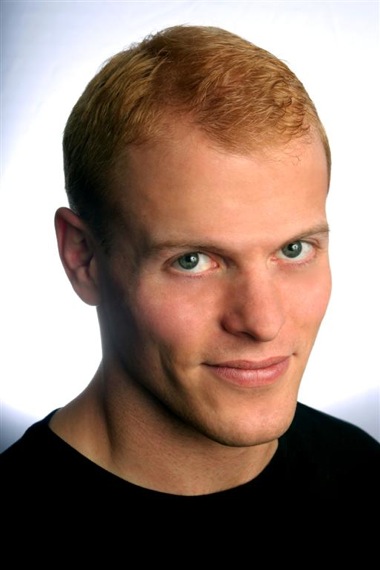
Tim Ferris

Enlace al video

¿Le han llamado últimamente para ofrecerle un servicio de telefonía, o una tarjeta de crédito? Es posible que su interlocutor estuviera en Argentina despierto a una hora inapropiada para la zona. Los costes más baratos, el cambio… Todo es viable, y efectivamente se hace porque es factible y es mejor (por lo general en lo referente a los costes). Increíble pero cierto.

Timothy asegura que es posible ganar tiempo y así hacer otras cosas: lo que a uno le guste: ganar una competición de tango, aprender chino, llegar a ser cinturón negro de karate… ¿a usted que le apetece? Los viajes son parte importante de la apuesta.

Lo cierto es que muchos autores publican un libro, lo promocionan y se olvidan; ¿qué más pueden hacer? Mucho. El libro de Tymothy remite a una página web donde el lector encontrará tablas como las del libro y esquemas para ayudarle a ordenar sus ideas y alcanzar sus objetivos, supone un estímulo para seguir insistiendo y perseverar en sus proyectos. Un blog, recursos, videos, comentarios del libro… En definitiva Timothy se ha preocupado no por vender un libro, si no por crear una relación mucho más intensa con el lector. Y la verdad es que cuando menos resulta divertido. Esto incluye la posibilidad de seguir sus andanzas y viajes a través de twitter. Y ver los viajes y retos que afronta es un estímulo más para sus lectores.

Una vez más encontramos autores que se quedan parados y se centran en las limitaciones (a lo sumo tienen un blog). Una vez más encontramos otras personas que hacen mucho más (videos, recursos, twitter) y establecen relaciones fuertes y duraderas.

Sólo una crítica. Ya que todo está tan bien pensado, ¿por qué supone Ferrys que todos sus lectores van a entender el inglés? Algo tan sencillo como ponerlo en español parece que se le ha escapado. Y yo casi me alegro, los fallos hacen que seamos más humanos. Por otro lado, este mismo blog hasta hace poco sólo podía leerse en español a pesar de las visitas recibidas de países anglosajones, por lo que no se lo echaremos en cara.

Post en inglés: Some people see a desert where others see an oasisNot so long ago I readThe 4-hour Working Week by Timothy Freiss. Its theme is the original and daring idea that not only is it possible to obtain the same results by working less, but that it’s even possible to earn more! Is this possible?

The viability of this idea aside, there are a number of interesting points to consider here. Firstly, the word ‘revolution’. A revolution doesn’t imply physical violence any more, thankfully, and this means that authentic revolutions can take place around us unnoticed, where important and significant changes happen that affect our daily lives. For example, the internet and social media is an ongoing revolution. One of the possibilities that Timothy mentions in his book is working from home, or from anywhere in the world, using the internet and a phone. Is this possible? For some jobs, if you think about it, it’s probably very possible.

Tim Ferris

Link to the video

Have you received a call recently from someone trying to sell you telephone services or a credit card? Well, the person calling you was probably in Argentina, and working during the night, or some other inappropriate time for his location. Cheaper costs, change, …, everything goes and in fact this sort of thing happens because it’s feasible and better (in terms of cost generally). Incredible, but true.

Timothy assures his readers that it’s possible to save time and so be able to do other things: whatever you like (entering a dancing competition, learning Chinese, become a black-belt at karate, … What would you like to do? Travelling is also an important option here.

Most authors tend to publish their book, promote it a bit, and then forget about it; but what else can be done? A lot! Timothy’s book has references to a webpage where the reader can find tables like those in the book, and diagrams to help him sort out his ideas and attain his goals, and this is a great stimulus and additional added value for the reader. A blog, resources, videos, comments on the book, etc… basically, Timothy has not worked simply to sell a book, but to create much more intense relationships with his readers. And I have to say that it’s good fun. It even includes the possibility of following his activities via Twitter. Following him on this trips and accompanying him in his challenges is yet another stimulus for his readers.

Again and again I come across authors who are standing still and just focus on the limitation (at the most they have a blog). But sometimes I find an author who does much more (videos, resources, Twitter, etc) and they establish strong and long-lasting relationships with their readers.

Just one criticism: if everything has been well thought out, why does Freiss assume that all his readers can read in English? It seems that the trivial task of translating into Spanish has eluded him. It almost makes me happy, because to err is human! I have to say though, that until a short time ago, my own blog was written exclusively in Spanish, despite the hits I knew were coming from English-speaking countries, so I’m not going to rub his nose in it!

Post in Spanish: Donde uno ve descampado otros ven un vergel.

Dominio de Punctum en la Primera Feria Internacional del Vino Ecológico Dominio de Punctum on the International Organic Wine Fair in Spain

Dominio de Punctum es un proyecto que arrancó hace 5 años y que lleva en el mercado únicamente 1 año.

Con una producción de 500.000 botellas, aspiran a crecer rápidamente.

La Bodega se encuentra en las Pedroñeras, Cuenca. Son 110 hectáreas de viñedo. Su filosofía es producir vinos ecológicos, a través de una viticultura sostenible, haciendo un producto de calidad de acuerdo a la tradición.

A 800 metros sobre el mar, con un suelo arenoso y rico en caliza, ideal para obtener muy buenas uvas y vinos con una personalidad muy definida. Producen tintos y blancos a partir de Tempranillo Graciano, Syrah, Cabernet Sauvignon, Merlot, Petit Verdot, Chardonnay, Sauvignon Blanc y Viognier.

Les distingue:

La búsqueda continuada de la calidad.
Elaboración ecológica
, para conseguir un vino natural que exprese las características de la tierra.
Esfuerzo continuado por la innovación. (P Ej Aplicación de métodos biodinámicos)
Valorar los recursos naturales. (P Ej. Reutilización del agua residual)
Compromiso con una agricultura y producción sostenible con una relación calidad precio muy atractiva.

Presenta en la feria Jesús Fernández Director Comercial y propietario de la Bodega. Presenta su producto Graciano Syrah de Dominio de Punctum.

Post relacionados:
Primera Feria Internacional de Vino Ecológico.
Primera Feria Internacional de Vino Ecológico. Después del evento
Post en inglés: Dominio de Punctum on the International Organic Wine Fair in SpainThe Winery Dominio de Punctum was born five years ago as a project and has now been in the market for one year.

They expect to grow rapidly; bearing in mind their 500,000 bottles produced every year.

The Winery is located in Las Pedroñeras (Cuenca) and has 110 hectares of vineyards. Their philosophy is to produce organic wines through sustainable viticulture in order to offer quality products elaborated according to traditional production methods.

They produce distinctive red and white wines from Tempranillo, Graciano, Syrah, Cabernet Sauvignon, Merlot, Petit Verdot Chardonnay, Sauvignon Blanc and Viognier grapes at 800 meters above sea level, on a sandy and limestone-rich soil.

Their main characteristics are the following:

– Permanent search of quality.
– Organic production in order to elaborate wines containing the essence of the region.
– Continuous efforts to innovate (i.e. application of biodynamic methods).
 Evaluation of natural resources (i.e. reuse of waste water).
– Commitment to sustainable agriculture and production with a very attractive good-value-for-money culture.

Jesús Fernández, Business Manager and Owner of the Winery, presenting his business at the Fair. Graciano Syrah (Dominio de Punctum) presenting his product.

Related posts:
First International Organic Wine Fair in Spain
First International Organic Wine Fair in Spain. After the event.

Post in Spanish: Dominio de Punctum en la Primera Feria Internacional del Vino Ecológico

Plan de Dinamización de Producto Turístico Ruta del Vino Ribera del DueroTourism Promotion Plan for Ruta del Vino Ribera del Duero

A la ribera del duero

Hay una serie de tendencias que son incuestionables aunque muchas bodegas aún no lo tengan muy claro. Y son:

Que con la globalización las Bodegas necesitan diferenciarse mucho más, de sus competidores.
Que la manera de diferenciarse más eficaz es aparte de por el propio vino y su presentación, de todo lo que rodea al vino. (las maravillosas historias que hay alrededor del vino).
Que, creciendo mucho la masa de consumidores que se interesan y profundizan sobre la cultura del vino, lo que más está creciendo, y con diferencia, son el número de personas que consideran muy atractivo el entorno del mundo del vino, el turismo enológico.
Que esto es una corriente que aún no ha arrancado en España con la fuerza con la que está sucediendo en otros países. (Italia, etc).
Cada vez hay más gente que huye del turismo de playa, cuyo principal defecto es el de haberse convertido el algo tremendamente homogéneo, frente a un turismo, mucho más atractivo y heterogéneo como puede ser el turismo rural y el turismo enológico.

Esto lo saben las Bodegas, y lo muestran con el tipo de visitas que ofrecen de forma regular a sus instalaciones. El tipo de lenguaje que utilizan es el que se usa para alguien que no ha visitado una Bodega anteriormente. Y por el tipo de preguntas, o de no preguntas que hacen los visitantes, uno percibe que los visitantes no están buscando tampoco un nivel más alto.

Tuve la suerte de coincidir con las responsables de “Consorcio Ruta del Vino” en mi reciente visita a Aranda con motivo de la reunión entre bloggers y Bodegas. Me explicaron su proyecto. Es este un proyecto muy bien planificado con un importante presupuesto en el que participan un buen número de organismos oficiales. Entre estos organismos: la Secretaría de Estado de TurismoDO de Ribera de Duero, las diputaciones de Valladolid, Soria, Segovia y Burgos, 44 ayuntamientos, 33 Bodegas, 11 Alojamientos, etc

Me preguntaba alguna Bodega sobre si debería de participar. Parece ser que el coste por Bodega es de no más de 2000 euros/año. Mi respuesta es que sin ninguna duda. Es este uno de los trenes en lo que, o te subes o te quedas perdido en el camino.

Es un problema de actitud. Algunas se centran en hacer un buen vino, pero se fijan poco o nada en lo que ocurre a su alrededor.

Y alrededor están pasando muchísimas cosas que hacen que una Bodega que tuvo éxito en el pasado y en el presente, posiblemente no lo tenga en el futuro.

Se trata de ser inquieto. Y ante la pregunta de si había que estar en Winefuture, o en Finewine o en la 1ª Feria Internacional de Vino Ecológico en España (si elaboras vino ecológico), mi respuesta es en todos casos afirmativa. Porque hay que saber qué hacen los demás, y lo que harán. Para luego, decidir cada uno su camino. Pero es muy fácil decirlo desde fuera sin ser responsable de un presupuesto

Este negocio se va haciendo cada vez más complejo. Solo saldrán adelante aquellos que hagan muy buen vino, y/o tengan una gran personalidad, y/o sepan aprovechar las nuevas formas de comunicación y comercialización.

Quiero dar mi enhorabuena a todas las Bodegas que han decidido apostar por el proyecto. Este proyecto ayudará a las Bodegas de Ribera de Duero a definir su camino en los próximos años. Y con este proyecto pasa lo mismo que con las nuevas tecnologías. Le sacarán más partido aquellas Bodegas que apuesten más por el proyecto. A todo aquél que siembre recogerá su cosecha.

Gracias a Cristina Prat y a Sara García por haberme atendido como lo han hecho. Son dos grandísimas profesionales que harán de este proyecto algo que ya va tomando forma un éxito.

Para aquellos que quieran conocer el proyecto a fondo les animo a que entren en la página que se ha creado para dar información sobre el tema. Ruta del Vino Ribera del Duero

Post en Inglés: Tourism Promotion Plan for Aranda de Duero

A la ribera del duero

There are a number of tendencies that are evident today, even though many wineries are still questioning them, such as the following:

Wineries need to differentiate themselves from their competitors more than before, given the ongoing process of globalization
-The way to differentiate better (apart form the actual wine and its presentation) is by telling the story of the winery
-There are more and more consumers that are interested in learning about the world of wine, especially those who are interested in areas peripheral to, but related to the world of wine, such as wine tourism.
-This is a tendency that is not in Spain as strong yet as it is on the abroad, and it comes from there with a tremendous force.

There are more and more people that are rejecting typical beach-tourism which is boring and mass-marketed, and are looking for something more interesting and individual, such as rural tourism with a wine connection.

Wineries know this, and it shows from the type of visits and experiences they regularly offer at their installations. The type of language they use is directed to people who have never been to a winery before. And from the type of questions asked (and not asked) one can tell that the visitors are not looking for a particularly sophisticated or highbrow level.

I was lucky enough to meet the people from the Consorcio Ruta del Vino” during my visit to Aranda for the tasting organized for Bloggers and Wineries. They told me about their project, which has quite an important budget with many different public bodies involved.

A few wineries asked me if they should participate or not. At a cost per winery of about €2000/year, my reply would be that they should definitely participate. This is a ‘train’ that you either catch or get left behind!

It’s an attitude problem. Some wineries concentrate on making good wine, and don’t pay any attention to what’s going on around them.

And there are lots of things going on that can have a huge impact on whether a winery will be successful in the future, even it’s been successful in the past.

Like I said, it’s an attitude problem. In answer to a similar question of “Should I participate in WineFuture, or FineWine or the International Organic Wine Fair?” my answer is undoubtedly a “Yes”. Because it’s important to know what other wineries are doing and what they’re going to do. Then you can make an informed decision. But it’s easy to say that, when you are not the responsible of don’a limited budget to administer!

The wine business is becoming evermore complex. The only wineries that will survive are those that make really good wine and/or have a charismatic personality and/or know how to make use of the new means of communication and commercialization.

In summary, congratulations to the wineries that have decided to go along with the Ruta del Vino de Ribera de Duero project, which will be a great help for them in defining their future path over the next few years. The same applies to the new technologies: the wineries that have gone with Ribera de Duero will make better use of them. From a tiny acorn the might oak grows!

My thanks to Cristina Prat and Sara García for spending so much time with me to explain their project. They are very competent professionals who will ensure the success of the Ribera de Duero project.

For more details and information of the project, see the webpage here: rutadelvinoriberadelduero.es

Post in Spanish: Plan de dinamización de Producto Turístico Aranda de Duero