Me recibe Eva Matute, relaciones públicas de la Bodega. Una chica encantadora, muy dispuesta y con muchos conocimientos.
La entrada a la Bodega es realmente atractiva. No hay nada más bonito que una Bodega enclavada en medio de sus viñedos. Transmite mucho.
Bodegas Marqués de Vargas está enclavada en la zona de los 3 marqueses, que son Marqués de Murrieta, Marqués de Vargas y Marqués de Romeral.
El grupo tiene otras dos bodegas. En Ribera de Duero, en Peñafiel, Bodegas y Viñedos Conde de San Cristóbal, y Bodega Pazo de San Mauro en Galicia.
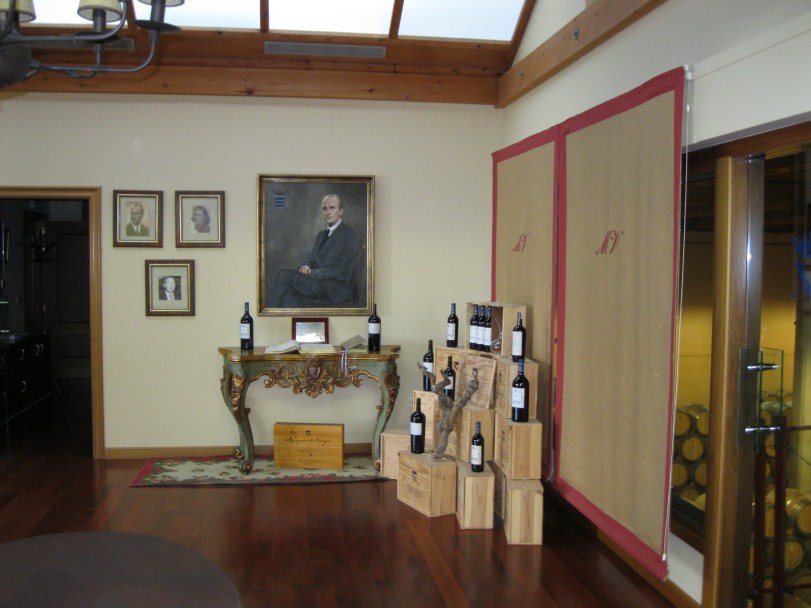
Entro en el edificio. Es éste un edificio muy elegante, decorado con mucho gusto. En las paredes se pueden ver colgados cuadros en los que aparecen los diversos dueños de la Bodega que ha habido a lo largo del tiempo desde 1840, ¡hace 170 años!, fecha en la que el octavo Marqués de Vargas empezó. La Bodega ha ido pasando de padre a hijo hasta el actual decimotercer Marqués de Vargas, D. Pelayo de la Mata. El edificio en el que estoy en este momentoy la Bodega actual están construidas en 1989.
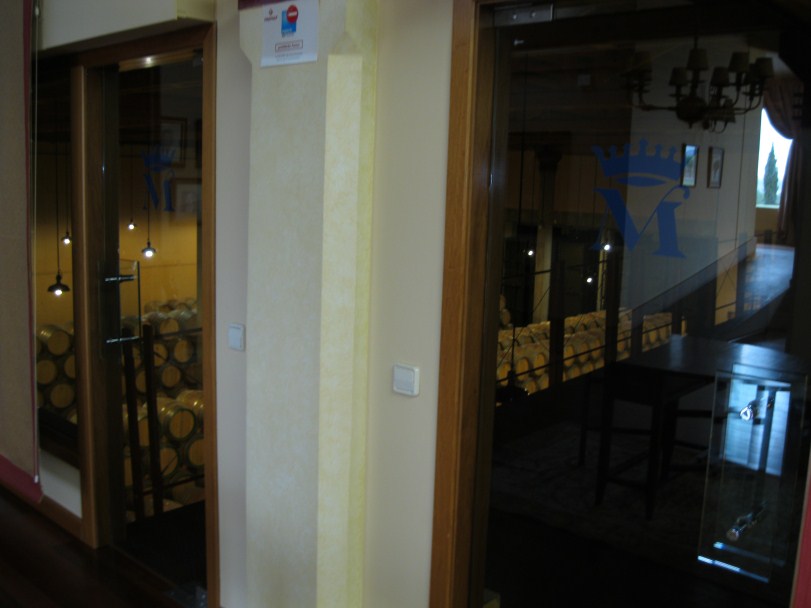
Desde el hall de la Bodega se puede ver a través de unas cristaleras la zona de barricas. El efecto de los cristales tintados y la iluminación hacen de esta zona algo espectacular.
Eva me conduce a las viñas. El jardín está muy cuidado. Se trata de un césped milimétricamente cortado que encaja perfectamente con la Bodega. El conjunto transmite elegancia, clase, buen gusto, calidad, perfeccionismo.
La Bodega elabora tres tipos de producto: Marqués de Vargas Reserva, Marqués de Vargas Reserva Privada y Hacienda Prado Lagar. Estos dos últimos solo se elaboran en los años en los que se consigue una uva espectacular.
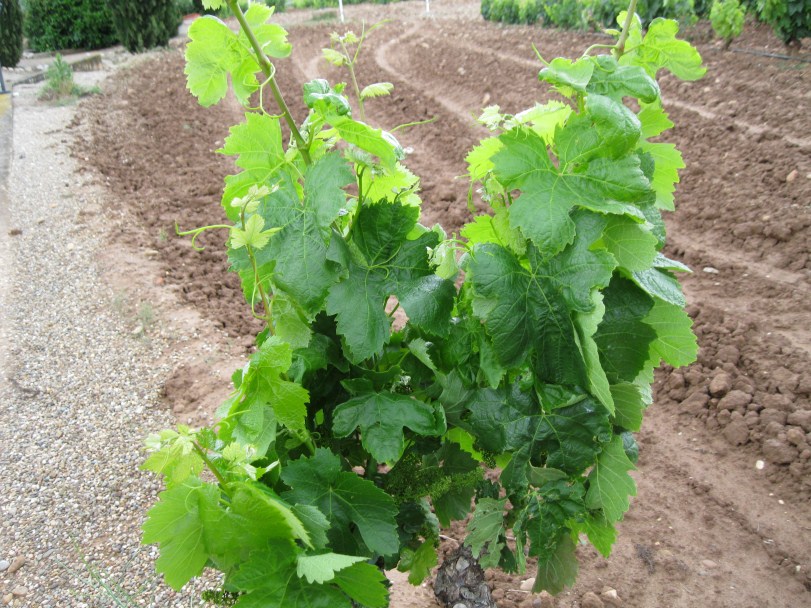
Nos aproximamos a la viña. Las cepas están exhuberantes.
Se trabaja únicamente con uva de sus propios viñedos. Tienen 70 hectáreas. Las cepas que tenemos delante tienen 37 años, pero en general tienen entre 40 y 50 años.
En Marqués de Vargas están focalizados en hacer un producto de muy alta calidad aunque para ello el coste de elaboración sea superior. Me dice Eva que la mejor selección de la uva se produce en la viña. Únicamente se cogen de 4.000 a 4.500 kgs frente a los 6.500 que admite la Denominación de Origen.
Durante el año se van haciendo múltiples trabajos en la viña para conseguir una uva de calidad. Los principales son: en invierno la poda del sarmiento, en mayo, la poda en verde, en agosto, el aclareo de racimos.
Las 70 hectáreas de viñedo se dividen en 16 fincas. Está todo separado por parcelas y variedades. Obtienen tempranillo, graciano, mazuelo y garnacha. La uva se recoge a mano en cajas de 15 kgs.
Pasamos a la zona de recepción, vemos la tolva de recepción, la zona de depósitos. Están impolutas. Unas instalaciones ideales para extraer lo mejor de una uva de primerísima calidad.
Me cuenta Eva que fueron pioneros en el uso del bazuqueador hidráulico, una máquina de 3 toneladas que persigue mover el sombrero de la manera más eficiente para sacar el máximo de color y sabores. Las levaduras que utilizan son autóctonas de la viña.
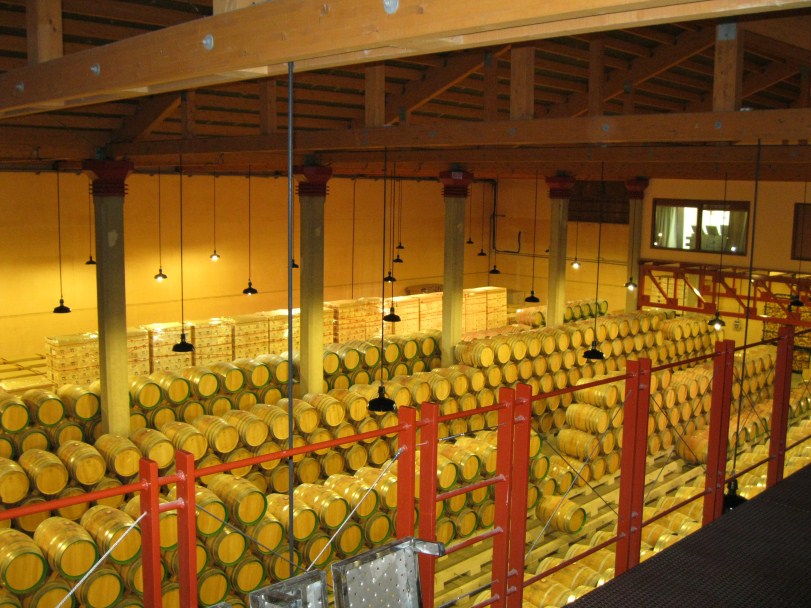
Nos dirigimos a la sala de barricas. En este momento hay 2.500 barricas aunque suele haber unas 3.000.
Nos desplazamos por un pasillo central elevado que nos permite tener una vista cenital muy atractiva del conjunto. Esto, junto a la iluminación hacen de esta sala algo realmente atractivo.
Tienen 3 tipos de barricas: Roble francés, roble americano y roble ruso. Marqués de Vargas fue también pionero en el uso del roble ruso.
Todos sus productos están por encima de los 90 puntos Parker. Elaboran unas 300.000 botellas del Marqués de Vargas Reserva, unas 45.000 del Marqués de Vargas Reserva Privada y 3.000 del Hacienda Prado Lagar.
Pasamos a la sala de catas. Una sala de catas no muy grande pero muy atractiva. Me da a degustar el Marqués de Vargas Reserva Reserva 2005.
Delicioso.
Ha sido una visita muy agradable en la que he podido ver una Bodega espectacular, elegante y con mucho estilo y personalidad. Como sus vinos.
Este post en inglés: Marqués de Vargas Winery visit.I was met by Eva Matute, the winery’s public relations person, who was very charming and knew a lot about wine.
The entrance to the winery is really nice. There’s nothing like a winery set in the middle of its vineyards. That alone says something about the winery.
Bodegas Marqués de Vargas is in an area called “Los 3 Marqueses”, namely Marqués de Murrieta, Marqués de Vargas and Marqués de Romeral.
The winery group owns another two wineries: Bodegas y Viñedos Conde de San Cristóbal (in Peñafiel, Ribera de Duero), and Bodega Pazo de San Mauro in Galicia.
Into the building; it’s an elegant building and very tastefully decorated. The walls are covered by paintings of the different owners of the winery since 1840, ie 170 years ago when the eighth Marqués de Vargas began making wine! The winery has passed down from father to son until today, when it’s owned by the thirteenth marquess, Pelayo de la Mata. The winery building in which I’m standing now was built in 1989.
From the main hall of the winery you can see straight into the barrel room through glass panels. The stained glass and the illumination combine to create a spectacular effect.
Eva then takes me to the vineyards. The garden through which we walk is very well cared for. Each blade of grass of the lawn has been mown to the millimeter. The impression is one of elegance, class, good taste, quality, perfectionism.
The winery makes three types of products: Marqués de Vargas Reserva, Marqués de Vargas Reserva Privada and Hacienda Prado Lagar. The latter two are only made in years when the grapes are of an exceptional quality.
We approach the vineyard; the vines are exuberant.
The winery exclusively uses grapes from its own vineyards. They have 70 hectares and the vines are mostly between 40 and 50 years old approximately.
At Marqués de Vargas they are focused on producing a very high quality product, even though the cost of doing so is significant. Eva tells me that the most important quality control process starts in the vineyard. Generally they only harvest about 4,000 to 4,500 kg per hectare, as opposed to the 6,500 kg permitted by the Denominación de Origen.
During the year they do many different jobs in the vineyard to assure themselves of the quality of the grapes. The main activities are: pruning in winter, green pruning in may and cluster thinning in August.
The 70 hectares are divided into 16 different plots, and are further subdivided by varieties, including Tempranillo, Graciano, Mazuelo and Garnacha. The harvesting is done by hand using 15 kg crates.
In the grape reception area of the winery we saw the hoppers and tanks. They were spotlessly clean. The installations in general were perfect for extracting quality must.
Eva told me that they were the first winery to use a hydraulic cap-puncher, a 3-ton machine that punches down the cap efficiently so as to extract the optimum amount of colour and aromas. The yeasts they use are the natural ones from the vineyard.
In the barrel room, they have over 2,500 barrels, though usually they have around 3,000.
We walk along an overhead walkway where we can get an ‘aerial’ view of the winery, which with the lighting makes the room look really attractive.
They have three types of oak: French, American and Russian. Marqués de Vargas was also a pioneer in the use of Russian oak.
All their wines have rated over 90 points on the Parker scale. They make about 300,000 bottles of Marqués de Vargas Reserva, about 45,000 bottles of Marqués de Vargas Reserva Privada and 3.000 bottles of Hacienda Prado Lagar.
Lastly, we go to the tasting room. Not very large but very tastefully decorated, and we taste a Marqués de Vargas Reserva Reserva 2005.
Delicious.
This was a very agreeable visit where I was able to see a truly spectacular winery, elegant and with lots of style and personality. Just like the wines.
This post in Spanish: Visita a Bodegas Marqués de Vargas