No puedes abrir una tienda de chuches el día de la cabalgata de Reyes. You cannot open a sweets shop on Halloween day

El futuro de los Medios de Comunicación

Entornos cerrados, entornos abiertos.

Es un tema muy en boga en este momento. El tipo de entorno está muy relacionado con un Internet abierto y gratis, y un Internet cerrado y, posiblemente, de pago.

Se dan entornos cerrados para colectivos interesados en algo muy específico que no interesa a la generalidad o que prefieren comunicarse con determinadas personas de forma restrictiva. El ejemplo típico es el del colectivo de médicos. Estos se comunicarán con colegas de forma más desinhibida, sabiendo que el gran público no tiene acceso.

Entonces. ¿Si se obtiene valor añadido por acceder a un colectivo exclusivo por qué no cobrar? Puede haber mil motivos para no hacerlo, pero lo importante es saber que podemos hacerlo.

En lo digital prima lo gratis. Algo puede ser gratis permanentemente si cuesta 0 o cerca de 0. Si conlleva coste, antes o después habrá que cobrar por el servicio. Si no, el negocio tiene que cerrar. A veces se cobra un intangible (reconocimiento, autosatisfacción por sentirse parte de un grupo, sentirse solidario, etc), o puede que los ingresos vengan de forma indirecta.

Se habla de ofrecer y de exigir servicios gratis, y surgen importantes contradicciones. Porque muchos de los servicios que consumimos, bienes de primera necesidad, etc, no son gratis.

De lo que no hay duda es de que la “Revolución en Internet” se está produciendo en los Social Media. Son Facebook, con 500 MM de usuarios, Twitter, Flickr, Youtube. O sea, entornos abiertos. ¿Monetizar? ¿Y la Revolución donde la dejamos? Interesante debate.

El sector de los videojuegos ha asumido que gran parte de los juegos que producen van a ser pirateados. Han decidido por ello lanzar al mercado juegos gratis para acceder al gran público, y cobrar de aquellos que quieren la versión sofisticada. Los “jugones” les siguen la corriente. Hablamos entonces de entornos abiertos de captación y de entornos cerrados y de pago para los que quieren la versión sofisticada de los mismos.

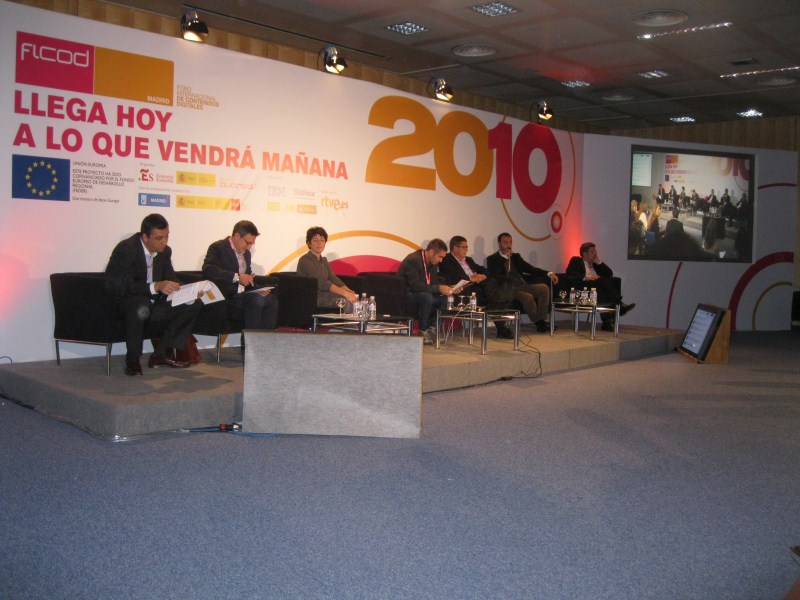
La polémica sobre abierto/cerrado, de pago/gratis, se vio con claridad en una conferencia interesantísima que se realizó en el último FICOD (Foro Internacional de Contenidos Digitales). Los ponentes eran primeros espadas de muy distintos e importantes medios de comunicación. Cada uno de ellos fue mostrando cuál era su apuesta por el medio digital. Cómo pretendían dar servicio en este entorno y cómo, al mismo tiempo pretendían monetizar. Nos indicaban que aunque la inversión y el gasto realizado eran muy superiores a los ingresos obtenidos empezaban a ver la luz. La respuesta de parte de la audiencia fue una exigencia de unos productos de mayor calidad y de que estos fueran ofrecidos en abierto.

Por la misma calidad de servicio un internauta optará siempre por la versión gratis que por la de pago. Es fantástico que las cosas sean gratis.  El problema está en la parte de la oferta. ¿Habrá alguien dispuesto establecer un servicio gratis tan bueno como el que ofrece otro de pago? Si lo hay, cómo vas a cobrar por un servicio que otro lo ofrece de forma gratuita.

Uno no puede abrir una tienda de chuches el día de la cabalgata de Reyes. 

El mercado y el tiempo nos pondrán a cada uno en su sitio.

La clave está en los costes. Si hay costes, a largo plazo nadie puede dar un servicio gratuito, alguien lo tiene que pagar, de una manera o de otra.

Varios proyectos en el mundo del vino han apostado por entornos cerrados, entornos abiertos y entornos mixtos. El debate está abierto. ¿Vale el ejemplo de los videojuegos?

Este post en inglés: You cannot open a sweets shop on Halloween day

El futuro de los Medios de Comunicación

Closed environments, open environments.

This is a very trendy topic nowadays. An open Internet usually means free, while a closed net often refers to paid systems.

Closed environments are linked to groups who are interested in something very specific that is not interesting for the general audience or who prefer to communicate with certain people in a restrictive manner. The typical example is doctors’ environment. They prefer to intercommunicate with other colleagues with no barriers, knowing that the rest of the population has no access.

If you get added value for entering an exclusive group, why not charging a fee for the service? You may have many reasons for not charging a fee but the important thing is that you could do it.

Generally, when we think about the Internet we think about non-paid access. You can keep something free if the costs of obtaining it are 0 or in the field of 0. If it involves any cost, you will have to charge for the service sooner or later; otherwise the business would have to close. Sometimes you earn an intangible (recognition, self-satisfaction for being part of a group, feeling of solidarity, because you feel like it, etc.).

When we talk about free we get quite often into contradictions. Because many of the services we consume, basic goods, etc. are not free. We have to earn our living.

There is no doubt that the so-called “Internet Revolution” is happening in Social Media in places like Facebook –with 500 million users, Twitter, Flickr or Youtube. In other words, open environments. Monetizing? And what about the Revolution? Interesting debate.

Video games producers have realized that many of their products are going to be hacked. For this reason their strategy is to launch basic and free videogames first to reach most of the audience and offer a premium version for “heavy users” that are looking for better quality videogames. We are then talking about open environments for getting traffic and closed environments for those who are willing to pay for a more sophisticated version.

The controversy on all this came up on a very interesting conference that took place in the last FICOD  (Madrid, October) (International Digital Content Forum). The speakers were representing very different and important communication media. Each speaker showed its specific commitment to play a role on digital media. They explained how they intended to offer a service in this environment and how they intended to get income out of it. The impression I had was that income was quite behind the investment and expenditure incurred; but I also got the feeling that they have begun to see the profitability path. The response of part of the audience was a requirement of better products and services, open and free.

There is no doubt that a customer will prefer a free service rather than a paid one if he does not appreciate major quality differences. The problem is on the supply side. Is there anyone willing to offer a free service as good as the paid service offered by another provider? You cannot offer a paid service if somebody offers the same service with the same quality for free. 

You cannot open a sweets shop on Halloween Day.

Market and time will put, both suppliers and customers, in place.

Cost is the key. On the long term you cannot offer a free service. Someone has to pay for it, one way or another.

Several projects in the wine world have chosen to go for closed environments, others for open environments or even for mixed ones. The debate is open. Are videogames a sector to take as a good example?

This post in Spanish: No puedes abrir una tienda de chuches el día de la cabalgata de Reyes

Nacen los Digital Wine AwardsThe Digital Wine Awards are born

Born Digital Awards

Las mismas personas que organizan el European Wine Blogger Conference (EWBC) anualmente, Robert McInstosh, Ryan Opaz  y Gabriela Opaz,han creado unos premios que pretenden destacar el nuevo periodismo especializado en vinos que se está dando en el mundo entero con la aparición de los Social Media. Los blogs, posts, o cualquier otra herramienta incluida en lo que venimos a  llamar genéricamente “Social Media” pueden estar escritos en muy diversas lenguas, entre ellas el castellano.

Mi opinión sobre estos premios es que seguro que están a la altura de lo que fue el EWBC en Viena. Lo que dije sobre el EWBC está recogido en el post,  European Wine Blogger Conference en Viena, 2010,  pero podría resumirlo con lo siguiente.

En el mundo de los vinos, Internet y los Social Media han irrumpido con enorme fuerza para cambiar de forma radical el conocimiento, la cultura, la generación de imagen de marca y la comercialización del mundo del vino. Pero la verdadera fuerza no está exclusivamente en Internet sino en hallar la perfecta combinación entre lo virtual y lo presencial. El EWBC es uno de los intentos más serios que existen en el mundo a mi criterio por combinar ambos mundos.

Que Robert, Ryan y Gabriela presenten los Digital Wine Awards no puede ser más que una garantía de calidad.

Así que si tienes un blog sobre vinos, escribas en la lengua que escribas, y te apetece participar en el concurso puedes participar en las siguientes categorías: La mejor historia de investigación sobre el vino, la mejor redacción con tema vinícola, el mejor post sobre el turismo del vino, el mejor video sobre el vino, el mejor contenido elaborado por una bodega.

El premio para cada una de las categorías es de 1000 euros. El plazo de inscripción finaliza el 28 de febrero de 2011.

Para más información acudir a la Página en la que se entra en detalle. http://borndigitalwineawards.com/.

Este post en inglés: The Digital Wine Awards are born

 Born Digital Awards

Robert McInstosh, Ryan Opaz and Gabriela Opaz –the people who annually organize the European Wine Blogger Conference (EWBC)– have recently created a new award aiming to enhance the new journalism specialized in wines worldwide as a result of the development of Social Media. The blogs, posts, or any other tools included in what we generically define as «Social Media» can be written in many different languages, including Spanish.

I think that these awards will be as well organized as the EWBC in Vienna. You can see what I wrote about the EWBC in this post:  European Wine Blogger Conference, Vienna 2010 or simply take a look at the following summary.

Both the Internet and Social Media have erupted with tremendous force in the world of wines to radically change the knowledge, culture and generation of branding and marketing of the wine world. But the real strength is not only in the Internet itself but in finding the perfect combination of virtual and non-virtual actions. In my opinion, the EWBC is one of the most serious attempts in the world to combine both spheres.

To know that Robert, Ryan and Gabriella are behind these Digital Wine Awards can only mean a guarantee of quality.

So if you have a wine blog –no matter the language– and you want to take part in the contest, you may participate in the following categories: Best Wine-related Investigation Story, Best Wine-related Editorial Writing, Best Wine Tourism Post, Best Wine Themed Video and Best Winery Self-Produced Content.

The prize for each of the categories is 1,000 Euros. The deadline for entries is February 28, 2011.

For more information visit http://borndigitalwineawards.com/.

This post in Spanish: Nacen los Digital Wine Awards

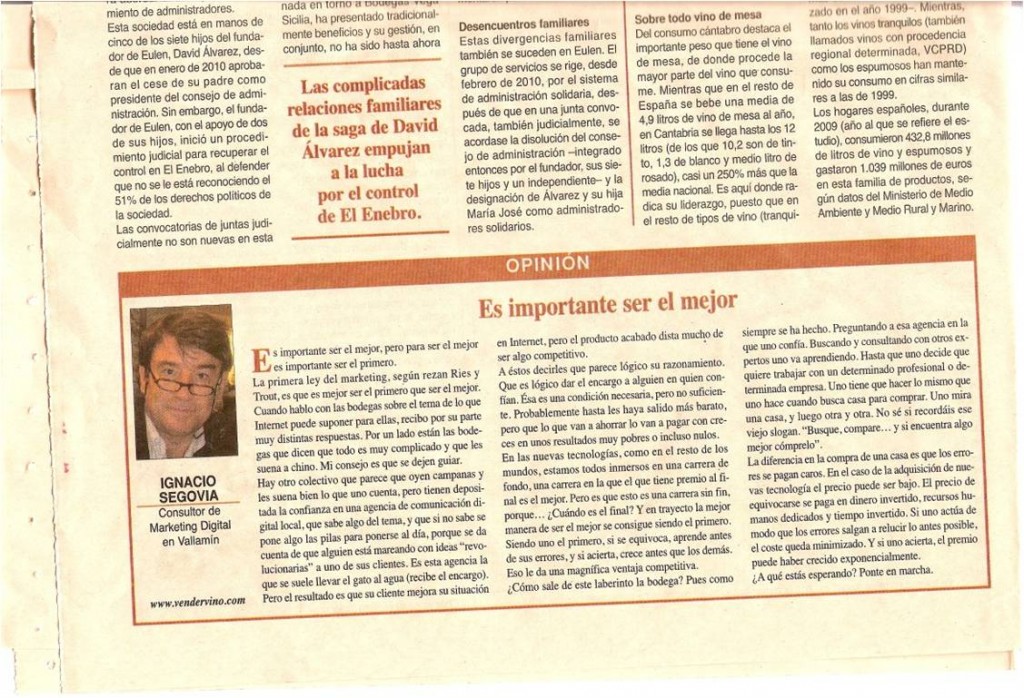
Es importante ser el mejor, pero…It is important to be the best but…

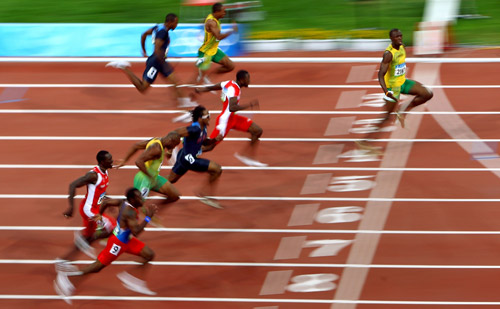
Usain Bolt

Publicado en Mercados del Vino y la Distribución en su ejemplar nº 61 del 15 de enero al 15 de febrero de 2011.

Es importante ser el mejor, pero para ser el mejor es importante ser el primero.

La primera ley del Marketing según rezan Ries y Trout es que es mejor ser el primero que ser el mejor.

Cuando hablo con las bodegas sobre el tema de lo que Internet puede suponer para ellas, recibo por su parte muy distintas respuestas. Por un lado están las bodegas que dicen que todo es muy complicado y que les suena a chino. Mi consejo es que se dejen guiar.

Hay otro colectivo que parece que oyen campanas y les suena bien lo que uno cuenta, pero tienen depositada la confianza en una agencia de comunicación digital local, que sabe algo del tema, y que si no sabe se pone algo las pilas para ponerse al día, porque se da cuenta de que alguien está mareando con ideas “revolucionarias” a uno de sus clientes. Es esta agencia la que se suele llevar el gato al agua (recibe el encargo). Pero el resultado es que su cliente mejora su situación en Internet, pero el producto acabado dista mucho de ser algo competitivo. A estos decirles que parece lógico su razonamiento. Que es lógico dar el encargo a alguien en quien confían. Esa es una condición necesaria pero no suficiente. Probablemente hasta les haya salido más barato, pero que lo que van a ahorrar lo van a pagar con creces en unos resultados muy pobres, o incluso nulos.

En las nuevas tecnologías, como en el resto de los mundos estamos todos inmersos en una carrera de fondo, una carrera en el que tiene premio al final es el mejor. Pero es que esto es una carrera sin fin, porque… ¿Cuando es el final? Y en trayecto la mejor manera de ser el mejor se consigue siendo el primero. Siendo uno el primero, si te equivocas, aprendes antes de tus errores, y si aciertas, creces antes que los demás. Eso te da una magnífica ventaja competitiva.

¿Cómo sale de este laberinto la bodega? Pues como siempre se ha hecho. Preguntando a esa agencia en la que uno confía. Buscando y consultando con otros expertos uno va aprendiendo. Hasta que uno decide que quiere trabajar con un determinado profesional o determinada empresa. Uno tiene que hacer lo mismo que uno hace cuando busca casa para comprar. Uno mira una casa, y luego otra y otra. No sé si recordáis ese viejo slogan. “Busque, compare… y si encuentra algo mejor cómprelo”.

La diferencia en la compra de una casa es que en este caso los errores se pagan más caros. En la adquisición de nuevas tecnología el precio puede ser bajo. El precio de equivocarse se paga en dinero invertido, recursos humanos dedicados, y tiempo invertido. Si uno actúa de modo que los errores salgan a relucir lo antes posible, el coste queda minimizado. Y si uno acierta, el premio puede haber crecido exponencialmente.

¿A qué estás esperando? Ponte en marcha.

Es importante ser el mejor

Fuente de imagen: canisport.blogspot.com

Conseguir tu atención. ¿Problemas? ¡¡¡Oportunidades!!!Get your attention. Problems? Opportunities !!!!!


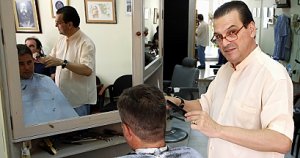
Peluquero (11.1.11)

El pasado 28 de diciembre (entre Navidades y fin de año) me han pasado tres cosas que me han hecho pensar.

Intenté concertar una cita con una tienda especializada en vinos. Me dijo el dueño que andaba con bastante trabajo en la tienda.

Me he subido a un taxi con un taxista enormemente dicharachero. Me ha contado su vida. A mitad de trayecto me ha dicho… “¿Pensará que soy un profesional del taxi?” ¿? “No señor. Al taxi le dedico muchas horas al día pero a mí lo que me pone es … la radioafición” … y ha soltado a través del micrófono… ¿QUÉ TAL COMPIIIIIIIIIS!!!!!!!? … Le han respondido 4 ó 5 compis.

He ido a cortarme el pelo. Tengo un peluquero que siempre anda en negocios de bastante envergadura de todo tipo. Había considerado la profesión de peluquero de caballeros como monótona y aburrida. Fue muy sorprendente para mí encontrarme en su momento con alguien tan dinámico como él.

Personajes como el de la tienda de vinos los hay a patadas. Deben de tener razón cuando me responden como lo hacen. Pero si aparece un taxista o un peluquero como los que menciono, destacan simplemente por comparación. Buscan y encuentran una oportunidad para adaptar su entorno a lo que les gusta. Consiguen con ello disfrutar de su profesión y sacarle un mayor partido.

Mi peluquero hablaba hace dos años de vender urbanizaciones enteras en Galicia. Ahora, de franquicias de 600.000 euros. Dice que probablemente se vuelva a Galicia (de donde es). Yo le digo que no lo haga. Tener esa profesión y un espíritu tan inquieto es una mezcla explosiva.  Goza de algo por lo que el resto de los mortales andamos locos por conseguir: disponer de 15 minutos en los que tus interlocutores no tienen nada con qué distraerse más que escucharte. Necesitas tener una conversación animada, para que te atiendan.

Una frase: “El éxito consiste en adaptarte a la realidad de la mejor manera posible y tratar de cambiarla en la medida de tus posibilidades”.

Captar tu atención (11.1.11)

Según un estudio recibimos unos 2400 impactos publicitarios diarios. Ante ese torrente de información todos nos hemos creado mecanismos para no prestar atención más que a unos pocos mensajes que nos interesan. En Internet como filtro utilizamos básicamente dos herramientas: 1) Los buscadores. 2) Los Social Media (Facebook, Twitter, blogs) (entornos en los que conocemos personas que ejercen de filtro porque así lo hemos decidido en la información que recibimos)  

Mi éxito en mi devenir profesional depende fundamentalmente de que tenga un discurso convincente,  y de conseguir que suficientes personas presten atención a mi discurso. ¿Cómo lograr que mis interlocutores dediquen 15 minutos a mi discurso como lo hacen con mi peluquero?

El mundo de hoy va de visibilidad. Y de atención.

Gracias por tu atención. Espero haberme ganado tu interés en volver a leer mis próximos artículos. 

Tu vida no es lo que te pasa, sino lo que haces con lo que te pasa.

Fuente de imagen: laverdad.es minghui-es.org

Este post en inglés: Get your attention. Problems? Opportunities!!!!! 

Peluquero (11.1.11)

On 28 December (between Christmas and New Year) three things happened to me that made me think.

I tried to make an appointment with a wine shop owner. He said to me he could not attend me for he had a lot of work in the shop.

I climbed into a taxi with an extremely talkative taxi driver. He told me his life story. At midway he told me … «you may think I am a professional taxi driver!» ? «No sir. I spend many hours driving a taxi everyday, but what I am really interested in is … amateur radio «… and he suddenly grabbed his microphone and said: WHAT’S UP, MATES? Four or five colleagues immediately replied.

I went to get my haircut. My barber is always involved in major businesses of all kinds. I considered man hairdressing monotonous and boring. It was very surprising for me to meet a barber with such a dynamic attitude.

 There are many people like the owner of the wine shop. And they may be right when they react as they do. People like the driver or the hairdresser I mentioned are simply outstanding if compared with the rest. They try to find an opportunity to adapt their environment to their likes. Thus they get to enjoy their work and get more out of it.

 Two years ago, my barber spoke about selling estate properties in Galicia. Now he is offering  600,000€ franchises. He says he will probably return to Galicia (he is from Galicia). I told him not to. Having the job he has together with his restless spirit is an explosive mixture. He has something that the rest of us are eager to get –having 15 minutes during which your interlocutors have nothing else to do but paying attention to your words. You need to have a lively conversation, so you can gain their attention.

A quote: «Success is to adapt to reality as best as possible and try to change to the extent of your ability.»

Captar tu atención (11.1.11)

According to a survey, we are exposed to around 2,400 daily advertising impacts. Faced with this flood of information, we have all established mechanisms to not paying attention more than to a few messages that interest us. In this sense, while using the Internet, we essentially use two tools as filters: 1) search engines 2) Social Media (Facebook, Twitter, blogs) (environments where we know people who act as filters because they have decided on the information we receive).

My success in my professional evolution crucially depends on having a convincing speech and getting enough people to listen to it. How can I get my interlocutors to spend 15 minutes listening to my speech as they do at the hairdresser’s?

Today’s World is ruled by visibility. And get attention.

Thank you for your attention. I hope I earned your interest in returning to read my next articles.

Your life is not what you get but what you do with what you get.

This image comes from: laverdad.es minghui-es.org

This post in Spanish: Conseguir tu atención. ¿Problemas? ¡¡¡Oportunidades!!!


Aprendamos de los hermanos Marx. Probemos, probemos.Much to learn from the Marx Brothers. Let us test. Again and again.

Mi vida con Groucho

Me he agenciado el libro sobre la vida de Groucho Marx escrito por su hijo Arthur Marx.

Y me lo estoy pasando pipa. Pero pipa, pipa. Porque tengo un recuerdo de las películas de los hermanos Marx como las más desternillantes de la historia del cine.

Me está pasando con este libro que me voy riendo solo. Y si leo en un sitio público supongo que la gente debe pensar que me he vuelto loco. Pues no. No me he vuelto loco, o no más de lo que estaba antes de empezar el libro.

Lo que me ocurre con el libro es que compruebo con el libro que este hombre Groucho Marx, no es que fuera divertido en las películas, es que era igual fuera de las películas. Un tipo divertidísimo que hacía las delicias de cuantos le rodeaban. No tanto de su mujer, y es que el hombre no era perfecto y su humor era algo machista, mucho más si consideramos que lo hacía en los años 30.

En un determinado momento empiezan a hacer películas para las grandes productoras de cine. Y tienen la suerte de encontrarse con Irving Thalberg. Los Hermanos Marx llevaban muchos años representando en salas de teatro su humor disparatado. Y estaban acostumbrados a trabajar con guionistas que creaban un guión. Se iban por distintos teatros, para, después de haber probado en muy distintos ambientes el guión, de haber pulido todo su discurso, hasta que llegaban a Broadway. Entonces la obra había cambiado tanto que ni tan siquiera los mismos guionistas reconocían casi una palabra de lo que previamente habían escrito.

Cuando los Hermanos Marx se ponen a trabajar en el mundo del cine convencen a Thalberg en cuanto a trabajar con sus propios guionistas y seguir con la tónica que habían hecho durante tantos años. Primero, un guión, luego salir de gira con las ideas principales de la película para ir viendo, con las reacciones del público cuáles eran los gags que funcionaban mejor, para hacer los retoques necesarios en el momento de la filmación y el montaje. Así se hizo en “Una noche en la Opera” (memorable) y alguna más. Murió Thalberg y los estudios de Hollywood trataron de meter en cintura a los Hermanos, eliminando este método de prueba y error. De alguna manera se cargaron la gallina de los huevos de oro, porque los Hermanos Marx nunca volvieron a ser los mismos en el mundo del cine.

El éxito de los Hermanos Marx provenía de un trabajo planificado previamente que se iba puliendo mediante la prueba y error, y todo lo que se hacía en sus películas que parecía tan espontáneo provenía de haberlo probado decenas de veces.

Yo no sé cómo se hacen las pelis actualmente.  Creo que no siguen ese proceso, aunque, recientemente determinadas productoras están aprovechando los Social Media para detectar qué es lo que va a funcionar en los guiones y lo que no.

Se ha hablado de las múltiples ventajas que aportan los Social Media y casi nunca se menciona la probabilidad de probar previamente cualquier idea. Que probar directamente a través de este medio es infinitamente más fiable y barato que cualquier estudio de mercado realizado con las tecnologías usadas previamente. Aunque solo fuera por esto merecería la pena entrar en Social Media.

Hagamos caso a los Hermanos Marx. Seamos valientes y probemos, probemos. Aprendamos de nuestros errores.

Imagen de: bibliotecanestor.blogspot.com

Este post en inglés: Much to learn from the Marx Brothers. Let us test. Again and again.

Mi vida con Groucho

I bought the book on Groucho Marx’s life written by his son, Arthur Marx.

And I’m having a great time –a really great time because I have good memories of the Marx brothers’ films as the most hilarious in the history of cinema.

 This book is making me laugh a lot, and if I read it in a public place I guess people must think I’ve gone crazy. Not really. I have not gone mad, or no more than I was before starting the book.

This book is making me understand that this man, Groucho Marx, not only was a funny person in his films, but also was he in real life –a funny guy that amused those around him. Not so his wife, as that man was not perfect and his sexist humour was very strong even if we consider than it was done in the 30’s.

At some point they start making movies for majors filmmakers. And they were lucky to meet Irving Thalberg. The Marx Brothers had spent many years representing their crazy sense of humour in theatres. And they were accustomed to working with scriptwriters. They would go to different theatres trying a script in many different environments and polishing the whole scene until reaching Broadway. In the meanwhile the work changed so much that not even the writers themselves recognized almost a word of what they had initially written.

 When the Marx Brothers put their work in the cinema world, they managed to convince Thalberg to work with their own writers and continue the trend that had worked for so many years. First, a script, then go on tour with the main ideas of the film to measure the reactions of the audience and analyze which jokes work better in order to make the necessary alterations in the time of filming and editing. This was done in «Night at the Opera» (memorable) and some more. Thalberg died and Hollywood studios tried to discipline the Brothers by eliminating the trial and error process. In some way, they killed the goose that laid the golden eggs, because the Marx Brothers would never be the same in the world of cinema.

The Marx Brothers’ success came from a previously planned work that would be refined through trial and error. All sketches that seemed spontaneous in their films were just the result of many rehearsals while touring around.

 I do not know how films are made nowadays. I think they do not follow this process, although recently some producers are taking about the advantages of Social Media to detect what is going to work on scripts and what not.

 We have talked about the many advantages provided by the Social Media and we hardly ever mention the probability of pre-testing an idea. Testing and trying directly through this procedure is infinitely more reliable and cheaper than any market research carried out with the technologies previously used. This single reason makes it worthwhile to enter Social Media.

Let us follow the Marx Brothers. Let us be brave and try and try. Let us learn from our mistakes.

Imagen de: bibliotecanestor.blogspot.com

This post in Spanish: Aprendamos de los hermanos Marx. Probemos, probemos.