Hoy voto por Pak Muñoz en el concurso “Un Año Sabático en la Rioja” Today I vote for Pak Muñoz at the “A Sabbatical Year in Rioja” Contest

Pak Muñoz en Un año sabático en la Rioja

Ayer conocí a Pak. Lo conocí en el Beers & Blogs que se celebra mensualmente en Madrid. Este Beers & Blogs era algo especial. Era el primero después de la vuelta de vacaciones, y tuve oportunidad de desvirtualizar a muchos bloggeros y twitteros.

Pak es un tipo muy singular que está participando en el concurso de un Año Sabático en la Rioja. La idea que están promoviendo desde la DO de Rioja me parece muy original, atractiva y novedosa. Y cuando reúnes esas 3 características en Social Media, la probabilidad de tener un éxito arrollador es bastante alta. Tienen a 15 tipos, antes más, compitiendo por ser el ganador en el concurso “Un año en la Rioja”. ¿Que de qué va el concurso? Pues aquí están la página web que lo explica.

Si los 15 tienen la ilusión y el empuje de Pak el nombre de la Rioja tiene que estar en todos los oídos de todo aquél que salga a tomar un  vino en cualquier punto de España.

Chapeau a los señores de la Rioja y a su agencia por la iniciativa, porque esto es auténtico y puro Social Media, porque esta es la clara demostración de que, claro que el Social Media funciona, pero claro que funcionan también las acciones presenciales de toda la vida. Y el éxito sobre todo  acompaña a aquél que encuentra el equilibrio entre ambos mundos. Esta acción es un claro ejemplo.

Y ahí estaba Pak, en medio de la reunión de bloggers, con su portátil, invitando a todo el que se le ponía a tiro a que se inscribieran y le votaran a él.

Y Pak es un tipo muy simpático y persuasivo. Está sexto en la votación, y pasan 5 a la gran final. No conozco al resto de participantes, pero hoy mi voto es para Pak. ¿Por qué a él y no a otro? Porque lo presencial tambien pesa.

Y dejo además este link para todo aquel que quiera votarle.

Mucha suerte Pak.

PD: Acabo de conocer también a Sara. Te deseo a ti también suerte.

Este post en inglés: Today I vote for Pak Muñoz at the “A Sabbatical Year in Rioja” Contest

Pak Muñoz en Un año sabático en la Rioja

Yesterday I met Pak. I met him at the Beers & Blogs annual meeting held in Madrid. This Beers & Blogs was somehow special –it was the first one after holidays, and I had the chance to see the face of many bloggers and Twitter users who gathered there.

Pak is a very peculiar guy, who is participating at the A Sabbatical Year in Rioja contest. I believe the idea currently being developed by the Rioja Appellation of Origin is original, attractive and interesting. And when you get all these three factors together in Social Media, your chances to reach success are pretty high. In this year’s edition, there are 15 guys competing to become the winner of the “A Sabbatical Year in Rioja” contest. What is this contest all about? Check this website to find out.

If all 15 show the same passion and interest Pak does, the name of Rioja will be in the mouth of every person going out for a glass of wine in every city of Spain.

Congratulations to the Rioja people and their agency, (Contrapunto Barcelonaon this initiative. This is real Social Media, and a clear demonstration of what Social Media can do in combination with face-to-face meetings. Only those reaching balance between both spheres manage to gain success –and this contest is a perfect example.

And there was Pak, in a bloggers meeting, with his laptop, inviting all people in the room to log in and vote for him.

Pak is a very funny and convincing guy. He is now in the sixth position of the ranking –only five of them will make their way to the final. I don’t know the rest of participants, but my vote today is for Pak. Why him? Because face-to-face meetings are also important.

Use this link to vote for him.

Good luck, Pak

PS: I just met Sara –I wish you good luck too.

This post in Spanish: Hoy voto por Pak Muñoz en el concurso “Un Año Sabático en la Rioja”
¿Internet no transmite emociones? El Aleluya de HaendelEmotions at the Internet? Handel’s Hallelujah


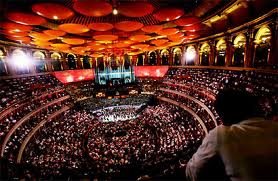
Albert Hall

Una de las objeciones que ponen algunas Bodegas a un mayor uso de Internet es su supuesta incapacidad de transmitir emociones.

La transmisión de emoción es un factor básico en la comunicación del vino y los grandes comunicadores actuales en este sector precisamente destacan por ello.

Y como esas Bodegas consideran que no se transmite emoción… ¿Hasta qué punto interesa utilizar este medio?

En general el medio Internet es un medio bastante frío, pero eso es más aplicable a una página web, en la que el diseño y los contenidos se hacen pensando en un visitante genérico más que concreto.

Con la aparición de los Social Media esto cambia. Uno entra en contacto con personas concretas que transmiten y perciben emociones. Y esa transmisión de emociones se parece más a las habituales de las Bodegas en su acción presencial.

En realidad los buenos resultados no están reñidos con la utilización de ambos medios (presencial, virtual). Se trata de aprovechar lo que de bueno tiene cada uno.

Me gustaría hablar del Aleluya de Haendel. ¿Cuántas veces habremos oído esta pieza? La hemos oído tantas veces que quizá ya no nos llama tanto la atención. Aunque la obra nos sigue gustando.

Este verano tuve la suerte de comprar y leer un libro maravilloso de Stefan Zweig, “Momentos estelares de la humanidad”. Uno de esos momentos estelares sobre los que escribe Zweig es: La Resurrección de Georg Friedrick Haendel. Mientras leía el capítulo (unas 30 páginas), puse de fondo la música del Aleluya. La experiencia fue tan gratificante que tuve que parar en más de una ocasión. La pieza me pareció infinitamente más bonita cuando conocí la historia maravillosamente escrita por el señor Zweig. Probablemente con este post lo único que consiga es que este autor venda más y más libros, pero si es así, bienvenido sea porque escribe como los ángeles.

He extraído este texto de un blog dedicado a él, para que, parcialmente, podáis repetir la experiencia.

Antes de empezar a leer os recomiendo iniciar el video para oír su música. (Empezar a leer cuando empiece sonar la música)


«Las lágrimas oscurecieron los ojos de Haendel. Tan formidable era la devoción que le oprimía, Aún quedaban páginas por leer, la tercera parte del oratorio. Pero tras aquel “¡Aleluya! ¡Aleluya!” no pudo continuar. Aquel regocijo vocal le colmaba, se tensaba y expandía, y dolía como un fuego líquido que quisiera salir a chorros, desbordarse. Ah, cómo apremiaba, cómo oprimía, pues quería salir de su interior. Quería subir y regresar al cielo. Con precipitación, Haendel agarró la pluma y trazó unas cuantas notas. Uno tras otro, los signos se formaban con una mágica rapidez. No podía detenerse; como un barco con la vela hinchada por la tempestad siguió adelante, adelante. A su alrededor, la noche guardaba silencio, y una húmeda oscuridad se cernía sobre la gran urbe. Pero en él la luz discurría como un torrente. E imperceptiblemente la habitación resonaba con la música del universo».

¿Emociona o no emociona el señor Zweig? ¿Hace la experiencia infinitamente más gratificante? 

Escribir como Zweig no es fácil. Más bien yo diría que es imposible, pero me he encontrado con comunicadores en el mundo del vino que me han emocionado tanto como Zweig, pero mientras, muchas Bodegas se centran casi exclusivamente que las Guías de Vinos les conceden.

¿A qué esperamos para contar esas maravillosas historias que tenemos? ¿A qué esperamos para transmitir emoción también por Internet? ¿A qué esperamos para diferenciarnos de la mejor manera posible?

Fuente de imagen: frangopeixe.blogspot.com

Este post en inglés: Emotions at the Internet? Handel’s Hallelujah

Albert Hall

One of the main objections Wineries tend to comment on the use of the Internet is its inability to transmit emotions.

Being able to communicate emotions is a basic factor in the wine sphere, and all great current communicators in this sector are especially good at this. Bearing in mind Wineries believe emotions are not communicated, how much are interested could they be in using this tool?

Generally speaking, Internet is still a very cold communication tool. However, this definition may be more applied to web pages, where designs and contents are aimed at a more general visitor rather than to a specific one.

All this is changing with Social Media, as we contact individuals who show and identify emotions. And such emotions are more similar to the ones shared while paying physical visits to Wineries.

In fact, goods results are proven to be linked to the combination of both spheres –physical and virtual. It is all about taking advantage of the good aspects of both worlds.

I would like to talk about Handel’s Hallelujah. How many times have we heard this piece? We have listened to it so many times that it has lost its ability to catch our attention. Even though, we still like it.

This summer I had the chance to buy and read a wonderful book by Stefan Zweig, “Decisive Moments in History”. One of these great moments includes Zweig’s words on the Resurrection of George Friedrick Handel. While reading that chapter –about 30 pages– I decided to play the Hallelujah. The experience was so gratifying and touching that I had to stop more than once. The piece seemed to me much more superb after reading the story wonderfully written by Zweig. Most likely, this post will make this author sells more and more books, and it would be great as his words are simply magnificent.

I got this text from a blog about him, so you may repeat my experience.

Before start reading, I would recommend you to play the video and listen to the music. (Start reading when the music is played).


“Tear darkened Handel’s eyes. Great was the devotion oppressing him, and there were still pages to be read –the third part of the oratory. But after that “Alleluia, Alleluia!” we was not able to carry on. Such vocal joy filled him, it tensed him and expanded, and hurt like liquid fire wanting to flow till overflowing. It rushed, and oppressed, trying to find its way out. It wanted to climb and go back to heaven. Handel rushed to his pen and wrote several notes. One after the other, signs became real magically fast. He could not stop, just like a boat with its sail pushed with the tempest navigates forward, and forward. Around him, the night remained silent, and a humid darkness covered the great town. But light flew inside him as a torrent. And imperceptibly the music of Universe was echoing inside the room”.

Aren’t Zweig’s words emotive? Doesn’t it make the experience much more gratifying?

Writing the way Zweig does is not easy. I would say it is almost impossible, but I have met communicators in the world of wine who have been able to touch me in the same way Zweig did. Meanwhile, many Wineries exclusively focus on the aspects Wine Guides require from them.

Why don’t we just tell these marvelous stories we know? Why don’t we just communicate our emotions through the Internet? Why don’t we just make a difference in the best possible way?

Source of image: frangopeixe.blogspot.com

This post in Spanish: ¿Internet no transmite emociones? El Aleluya de Handel

Corres bien, pero fuera del camino. ¿La estrategia dicta la táctica o es al revés? You run well, but outside of the path. Does strategy dictates tactics or is it the other way around?

Corres bien pero fuera del camino

Escribí hace tiempo sobre Ries y Trout. Son dos autores que me fascinan. He leído mucho sobre ellos y a Jack Trout tuve la suerte de conocerle personalmente en una conferencia que daban en una convención de Philip Morris España a la que yo asistí hace ya unos cuantos años.

Escribieron varios libros con mucho éxito en los años 80 y principios de los 90. Me parecía tremendamente interesante lo que contaban. Pero según pasan los años y repaso lo que decían me doy cuenta de que sus teorías están con la aparición de Internet más vigentes que nunca. En este caso me quiero referir a su libro “Bottom Up Marketing” La Táctica dicta la Estrategia. El título lo dice todo. ¿Hasta qué punto podemos anticipar por donde queremos ir sin confrontarlo con la realidad?. ¿Hasta qué punto podemos prever lo que va a pasar cuando las cosas cambian de un día para otro?. En un mundo en el que existe una incertidumbre creciente. En el que todo es nuevo y todo está por probar. No existe otra solución que estar muy cerca del mercado y utilizar la prueba y el error (táctica) para revisar nuestro plan (estrategia)

Corres bien, pero fuera del camino”. . Se lo oí decir a Manuel Fraga cuando se dirigía a un adversario político. Me pareció una frase muy ingeniosa. Rebuscando comprobé que el autor de la misma es San Agustín. Bene curris, sed extra viam. Es muy importante reflexionar para saber dónde quiere ir uno y cómo hacerlo. ¿Pero cómo hacerlo en un mundo tan cambiante?

No podemos prever cuál va a ser el camino preciso, tan solo una idea de por dónde queremos ir. Y está muy bien el ponerlo sobre un papel que nos permita entender cuál es nuestro norte. Si lo conseguimos habremos dado un paso de gigante. Se trata de exponer esa estrategia lo más concretamente posible, y ponerse a andar. Y revisar esa idea cada x tiempo para contrastar si hay que retocarla. Con la aparición de Internet y los Social Media podemos difundirla y contrastarla con mucha mayor facilidad y más bajo coste, para encontrar compañeros de viaje (evangelizadores) que apoyen nuestra idea, o detractores que nos sugieran desviar nuestro rumbo, y en algún caso abandonar la idea. Hay un libro maravilloso de Seth Godin que nos dice que abandonar una idea no exitosa no es ningún fracaso. El fracaso está en seguir y seguir con una idea que no funciona. (Salir del abismo)

Hay también un proverbio árabe que dice: «Si un hombre te dice que pareces un camello, no le hagas caso; si te lo dicen dos, mírate en un espejo».

Internet y los Social Media permiten que no sean 2 sino muchísimos más los que pueden ayudarte a aupar o tirar una idea abajo.

He oído últimamente en muchas ocasiones que las ideas no valen mucho. Que lo que vale es la capacidad de implementación. Y cada día me lo creo más. Las únicas ideas que valen son las que se ponen en marcha y éstas sufrirán tanto cambios que probablemente no tendrán nada que ver con la idea original de la que partieron.

¿Tienes una idea? Impleméntala, cuéntala, mejórala y lánzate a la piscina u olvídala.

Posts relacionados:

Decidir en tiempos de incertidumbre
Howard Hughes era un gurú de las nuevas tecnologías.
¿Motivación para emprender? El topalantismo.
Ficod 2009 y Bernardo Hernández. ¿Crisis? ¡Oportunidades!

Este post en inglés: You run well, but outside of the path. Does strategy dictates tactics or is it the other way around?

Corres bien pero fuera del camino

Some time ago I wrote about Ries and Trout. These two authors are really fascinating to me. I have read very much about them and I had the chance to meet Jack Trout in person in a conference he gave for Philip Morris Spain I attended four years ago.

 They both wrote several best-selling books back in the eighties and early nineties. I though their stories were tremendously interesting. However, after some years have passed by, I take a look back and realize that their theories are still alive with the birth of the Internet. I am now referring to their book “Bottom Up Marketing” Tactics Dictate Strategy. The title tells you everything. How much can we anticipate from our intentions without being them previously compared to reality? How much can we predict bearing in mind things change everyday? All this in a world where uncertainty grows everyday, every thing is new and everything is still to be tested. There is no other solution than being close to market and use the try-and-fail technique (tactic) in order to review our plan (strategy).

You run well, but outside of the path”. I heard these words from politician Manuel Fraga when talking to one of his political adversaries. After some researching, I found out the author of this sentence was Saint Augustine –Bene curris, sed extra viam. It is important to stop and think about where are we heading to and how to tackle every situation. But how can we handle all that in such a changing world?

 It is impossible for us to forecast the right path, we may only come up with a general idea of towards we want to go. And it is a good idea to write it on a piece of paper so we do not miss our goal. Achieving this represents a great leap. We are talking about being precise when defining our strategy and set it in motion. Such idea must be periodically reviewed and modified if required. The Internet and Social Media allow us to spread our idea and contrast it in an easier and cheaper way in order to find trip companions (evangelizers) supporting us or, on the contrary, detractors suggesting to change our path or even change our ideas. There is a wonderful book by Seth Godin telling us abandoning an unsuccessful idea is not a failure. We only fail when we focus all our efforts on an idea that does not work (The Dip).

There is also an Arab proverb saying “If a man tells you look like a camel, do not pay attention to his words; if two men tell you so, then see yourself at a mirror”.

Internet and Social Media make possible that not only two people but also many more help you to push or destroy your ideas.

 I have heard many times that ideas are not very valuable –what is really important is the ability to implement them. And I believe this is true day after day. Only those ideas implemented are valuable, and they will change so much that they will probably have nothing to do with the original concept.  

Do you have an idea? Implement it, tell it, improve it and fight for it. Don’t feel like doing so? Then just forget about it.

Related posts:
Making decisions in Uncertain Times
Howard Hughes was a New Technology Guru

This post in Spanish: Corres bien, pero fuera del camino. ¿La estrategia dicta la táctica o es al revés?


Necesito jugar más finales como ésta. Cuenta tu historia a través de Social Media I need to play more finals like this. Tell your story through Social Media

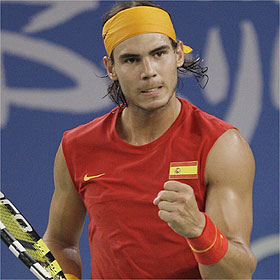
Rafael Nadal

Soy, como muchos españoles un ferviente admirador de Rafael Nadal. Leía hace unos días en una encuesta realizada en el Magazine de El Mundo que había salido como hombre más deseado en España en 2010 . Eso no ocurrió ni en 2008 o en 2009. Intuyo que las causas por las que los demás le admiran ahora más que nunca son similares a las mías.

La imagen que tenía sobre él es que le había costado poco llegar arriba. Cuando leía la prensa y veía que había vuelto a ganar, me decía a mí mismo: “Normal. Gana siempre” Me mosqueaba que llegara muchas veces a los 5 sets. Porque podía parecer que estaba pactado. Luego he entendido que el que va un set por debajo, aun siendo inferior, saca precisamente de esa frustración de ir por debajo fuerzas de flaqueza para igualar el set. Cuando le veía en directo me daba cuenta de que realmente tenía que esforzarse al límite en los puntos clave. Cuando llegaba el 5º set, llegaba la hora de la verdad y ahí suele ganar el mejor y el que se lo cree. Y ganaba Nadal porque era el número 1 del mundo.

Pero aparecieron sus problemas familiares, sus problemas con las rodillas. Y empezó a perder. Y perdió y perdió. Nos lo contaban los medios de comunicación y todos estábamos pendientes de sus derrotas y sufríamos con él. Pudimos saber que realmente lo estaba pasando mal. Me interesan mucho las frases que pronuncian los deportistas de élite cuando acaban los partidos porque considero que son un verdadero motor de la voluntad y enseñan gran parte del motivo de su éxito.

 Y me gusta lo que dice Nadal. En enero de 2010. Después de haber perdido su enésimo partido contra un top ten y su tercera o cuarta final en la temporada 2009-2010 dijo lo siguiente. “Necesito jugar más finales como ésta”. A mí se me puso la carne de gallina, porque vi que era la actitud más positiva que se podía tener después de haber perdido de nuevo una final. Demostraba que tenía un hambre enorme de aprender de sus errores. E intuí que a Nadal le faltaba poco para volver a ser el que era. Mientras, Federer estaba ganándolo todo y batiendo los records de mejor jugador de la historia. Porque que no se nos olvide que Federer es actualmente el mejor jugador de la historia del tenis.

Pues malas noticias para Roger: Ha vuelto Rafa. Te toca volver a llorar.

Nadal se ha llevado de un tirón Roland Garros y Wimbledon. Y es ahora, y no hace 2, 3 años el hombre más deseado/admirado de España. Ahora sabemos que vuelve a ser el número 1… y lo mucho que le ha costado volver.

Admiramos a los mejores. Pero admiramos mucho más a los que se lo curran enormemente para ser los mejores. Y si te pones a rascar, detrás de cada deportista número 1 en su actividad hay alguien que entrena y practica más que nadie. Porque los grandes deportistas no se forjan en las finales. Eso son únicamente las consecuencias. Se hacen en los días de entrenamiento a lo largo del año.

Sabemos mucho sobre Nadal y sobre lo mucho que le ha costado volver a la cumbre. ¿Y sobre tus vinos y tu Bodega? Ya sé que tus vinos tienen 90 y 92 puntos según Parker, y 93 y 95 según Peñín, pero… ¿qué otras finales has jugado? ¿Cuántas has ganado y en cuántas has sido finalista? ¿Cuáles tus éxitos parciales y los obstáculos que has tenido que superar? ¿Cuantos años han tenido que pasar para llegar hasta dónde has llegado? ¿Saben todos tus clientes y los clientes de tus clientes lo buenos que son tus vinos y todo lo que has tenido que hacer para llegar donde estás? ¿Se ha ocupado algún medio de comunicación de contarlo? ¿Estás satisfecho con cómo lo contó? ¿Opinas que el mercado nacional e internacional sabe todo lo que tiene que saber sobre tus vinos y tu Bodega? ¿Haces todo lo que está en tu mano para diferenciarte de tus competidores?

Si la respuesta a todas esas preguntas ha sido satisfactoria, enhorabuena, pero si no lo es… ¿Qué tal si aprovechas lo que los Social Media te pueden dar para contarle al mercado todo lo que haces para conseguir los vinos que elaboras? 

¿Necesitas más motivos para entrar en Social Media? Los motivos son innumerables, pero solo por éste yo recomendaría entrar a una Bodega en Social Media. Porque no sabemos si alguien lo va a contar por nosotros, porque nadie lo va a contar como nosotros.

Este post en inglés: I need to play more finals like this. Tell your story through Social Media 

Post relacionados:
Contar mil historias distintas una vez vs contar la misma historia mil veces
La importancia de contar una buena historia.
Solar de Samaniego. Cada vino tiene una historia. Cada historia tiene su vino. En elmundo.es
Visita a Bodegas Marqués de Riscal. Una historia que contar.
Abadía Retuerta. ¿La mejor historia mejor contada?

 Fuente de imagen: as.com

Rafael Nadal

As many other Spaniards, I am indeed a great fan of Rafael Nadal. A couple of days ago I read a survey published in El Mundo’s Magacine (Magacine) revealing Nadal was the most admired man in Spain in 2010. This did not happen in 2008 or in 2009. I guess many admire him nowadays for the same reason I do.

The idea the general public had about Nadal was that it had been easy for him to reach the top. Every time I read in the newspaper he had won a tournament, I used to say to myself, “that’s normal, he always wins”. Sometimes I even got upset when he was heading towards a fifth set –it seemed everything was pre-arranged. Then I understood that the one going a set down gets all the strength he needs from that situation –a situation that gives him the push to try to reach the victory. When I saw him live, I realized that he really had to make a great effort in key points. The fifth set represented the moment of truth had arrived, and only the best and the ones believing in themselves are victorious. And Nadal is one of those, because he is the number one in the world.

But then family and knee problems came up, and he started to lose, defeat after defeat. Media told us everything and we were all suffering with him. We could really feel he was going through tough times. I am very interested in the sentences top sport players usually say at the end of a game, because I consider them to be a real engine for motivation and I think they teach a lot through their victories

And I like what Nadal says. In January 2010, after being defeated in his umpteenth match against a top-ten player in his third or fourth final of the season 2009-2010, he said, “I need to play more finals like this”. This really touched me. I could then see what was his most positive attitude after losing another final. Nadal showed he was willing to learn from his mistakes, and I felt Nadal was close to be what he had to be. Meanwhile, Federer was winning absolutely everything and beating all records in his way to become the best tennis player ever. It is important to remember that, up to date, Federer is indeed the best tennis player ever.

I have bad news for you, Federer. Rafa is back, and now it’s time for you to cry again.

Nadal won Roland Garros and Wimbledon. And it is now –not two or three years ago– that Nadal is the most admired man in Spain. Now we know he is the number one, and we know how hard it has been getting there.

We admire the best. But we admire much more those who unceasingly work everyday to become the best. There is always a person who practices a lot behind every top sportsman or woman. I don’t think sportspeople become legends just in the finals. This is just the consequence of their daily efforts and work.

We know much about Nadal and we know how hard it has been for him to reach the top. What about your wines and wineries? I know your wines have 90 and 92 points according to Parker, and 92 and 93 according to Peñín, but… what other finals have you played? How many of them have you won and how many have you lost? What are your achievements so far and the obstacles you have overcome? How long has it taken you to be where you are nowadays? Do all your customers, and your customers’ customers know how good your wines are and the efforts you have made? Has any media informed about it? Are you satisfied with the way they did it? Do you think the national and the international market know everything about your wines and your winery? Do you do everything possible to make a difference in comparison to your competitors?  

If the answer to all these questions is positive, congratulations. If it is not, what if you take advantage of the Social Media in order to promote your work and your product?

Do you need further reasons to join Social Media? The reasons are countless, but only for this I would recommend to enter a Winery into Social Media. Because we don’t know if anyone will tell everyone about us, but we know no one could tell it the way we do.

This post in Spanish: Necesito jugar más finales como ésta. Cuenta tu historia a través de Social Media

This image is from: as.com


Vino ecológico en Rioja. Viñedos Ruiz JiménezOrganic Wine in Rioja. Ruiz Jiménez Winery.

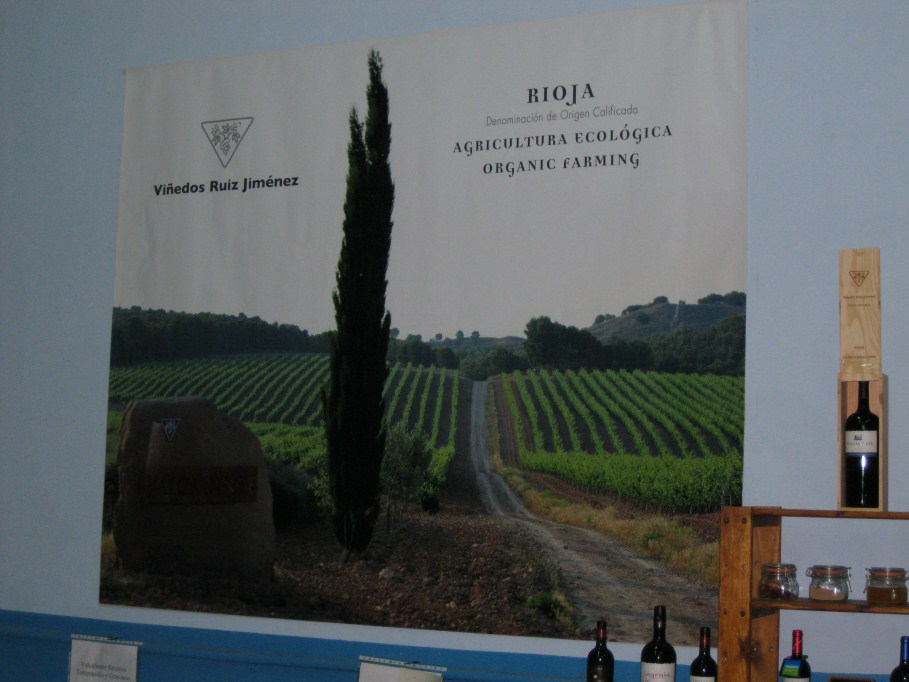
Cartel de los Viñedos Ruiz Jiménez

Quedo con Francisco para ver su Bodega. Inicialmente había quedado a las 12,30 horas, pero una serie de imponderables hacen que tenga que retrasar mi llegada. Me dice Francisco que es una lástima porque únicamente podrá enseñarme la Bodega y no los viñedos que son los que considera que son la clave de su negocio.

Llego por fin a Viñedos Ruiz Jiménez. Francisco es un hombre que tiene las ideas muy claras. Arrancó hace 17 años y apostó por el vino ecológico. Y desde que arrancó no ha parado de crecer a un ritmo no inferior al 10% ningún año. ¿Cuántas Bodegas pueden decir eso en 2009 y 2010?

Y lo que sí hace es no parar de trabajar. Y cuando te habla lo hace con el tono y la seguridad de alquien que ha probado muchas cosas y que tiene muy claro cómo seguir creciendo a ese ritmo. Que se trata de alguien con el que se tiene que contar sí o sí en la elaboración del vino ecológico en España. Hay dos cosas de las que trata de defenderse y son: tener que acudir a todas las ferias y eventos a los que le piden que acuda, y aprovechar las nuevas tecnologías y todo lo que conlleva Internet. Considera que el término ecológico no es el primer atributo por el que quiere que se le conozca sino que, por encima de todo quiere destacar por la calidad de sus vinos, y que además sus vinos son ecológicos.

Zona de depósitos

En el tema de Internet reconoce que debería de tener una mayor y mejor presencia en Internet. Tiene claro que el día que lo aborde lo hará pero dentro de un plan más global y de una manera muy profesional.

Francisco arrancó en una cooperativa hace 17 años, pero 5 años más tarde se independizó. Y en estos 17 años lo que ha hecho es construir una relación muy estrecha con sus clientes en muy distintos puntos del mundo. El 95% de sus ventas son en el extranjero, y esos 17 años de sembrar implican que, a estas alturas, cuando va a una feria, va, más que a conocer nuevos clientes a intentar consolidar un poquito más la relación que ya tiene con ellos.

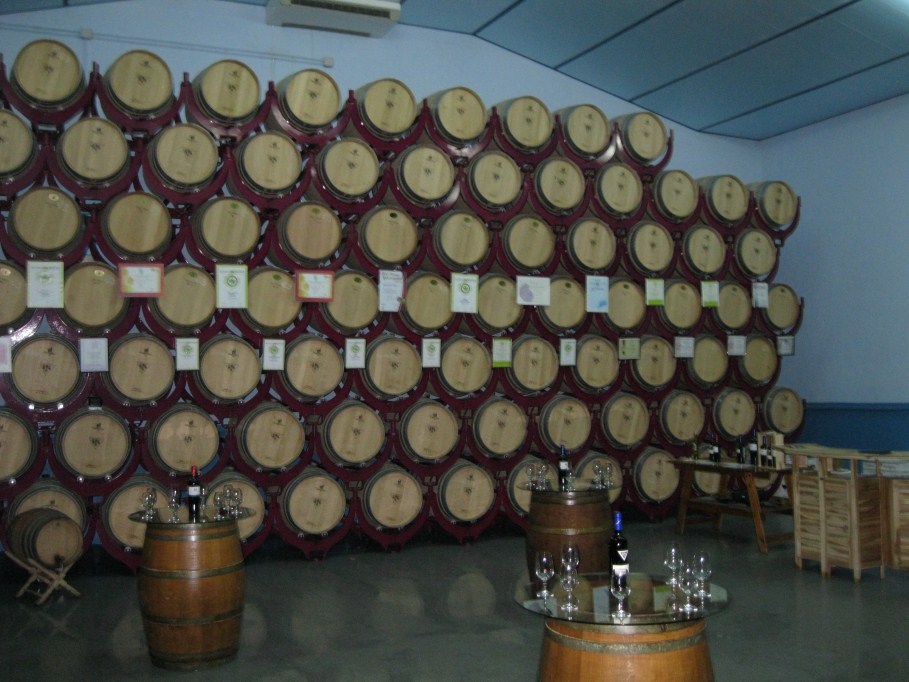
Me enseña sus instalaciones, la zona que tiene preparada en la sala de barricas para hacer catas. Pero mientras le acompaño vuelve a lamentarse de que no pueda visitar en esta ocasión el viñedo, verdadero artífice de su éxito. Es allí donde hace las «super» catas. Puedo ver en la zona de barricas los muy diversos premios que sus vinos han obtenido a lo largo del tiempo y que de forma original tiene expuestos entre las barricas. Y ahí se me adelanta Francisco diciendo “Ya sé que deberían de aparecer en Internet pero,… no doy abasto.”

Zona de barricas

Visito su página web y veo una página bastante sencilla en la que habla de su negocio sin extenderse demasiado y en la que destacan sobremanera las fotos de los viñedos. Los viñedos son espectaculares. Espero haber transmitido el mensaje de que admiro la fantástica labor de comercialización presencial que ha realizado, que elabora un vino de muy alta calidad y ahí están sus resultados, pero que habrá clientes o clientes de sus clientes que quieran saber más sobre su bodega y sus vinos y sería muy bueno que él mismo pudiera tener su propia voz en la “enorme conversación” que se está dando en el mundo del vino.

Espero haberle sabido transmitir que su Bodega tiene mil historias maravillosas que contar y que sus ventas no podrían sino aumentar si cuenta  esas mil historias por internet (eso es una de las grandes ventajas de Social Media).

Los productos que elabora y comercializa son Valcaliente Crianza, Valcaliente Reserva y Perseus Joven

Hasta pronto Francisco. Porque yo tu viñedo no me lo pierdo.

Premios obtenidos

Este post en inglés: Organic Wine in Rioja. Ruiz Jiménez Winery. 

Cartel de los Viñedos Ruiz Jiménez

I arranged to meet Francisco to see his Winery. We were supposed to meet at 12:30, but a series of unexpected events postponed my arrival. Francisco regretted we would not have the chance to visit his vineyards, which he believes are the key of his business. So we only visited the winery.

I finally reached the Ruiz Jiménez Winery. Francisco has very clear ideas. He started his business 17 years ago, and he concentrated his efforts on organic wine. Ever since his business has not stopped growing at a minimum rate of 10% every year. How many wineries can say that in 2009 and 2010?

He works a lot. In his words I can sense the confidence of an experienced person who knows for sure the way to continue growing at this pace. He is a person who must be taken into account in the world of organic wine production in Spain. There are two matters he tries to excuse himself for not being able to attend every single fair or event he is invited to, and not taking advantage of new technologies such as the Internet. He said he does not want to be known for the term “organic”, but for the quality of his products, which are indeed organic.  

Zona de depósitos

Regarding the Internet, he recognizes he should have more and better presence on the net, but he wants to do it in a global and professional way.

Francisco started 17 years ago as part of a cooperative. However, five years later he decided to quit and start his own business. During these years, Francisco has built up a close relationship with his customers in different parts of the world. 95% of his sales are made abroad. At this point, visiting fairs implies meeting new customers or consolidating the relationship with old clients.

He showed me his premises, where there is a special place for tasting at the barrels area. In our way, once more he regrets I cannot visit his vineyard –the very essence of his success. It is there where the “super tasting” takes place. I could see all the awards his wines have been given since the beginning of his business, all displayed in a very original manner on the barrels. And then, Francisco added –I know we should be on the Internet… but I don’t have time”.

Zona de barricas

I visited his website where the business they perform is briefly presented and where the pictures of his vineyards represent a core part. The vineyards are simply breathtaking. I hope it is clear through these lines that I deeply admire the trading tasks he has carried out in person, his production of very-high-quality wine, and his outstanding results. However, there will be customers, or his customers’ customers willing to know more about his winery and his wines, and it would be very helpful that he could have his own voice in the “great conversations” taking place in the world of wine.

 I hope I have faithfully express the idea that Francisco’s Winery has thousands of wonderful stories to tell, and that his sales would increase if he shared such stories through the internet (such are the advantages of Social Media).

The products sold and traded at his winery are Valcaliente Crianza, Valcaliente Reserva and Perseus Joven 

See you soon, Francisco. I wouldn’t miss your vineyards for the world.

Premios obtenidos

This post in Spanish: Vino ecológico en Rioja. Viñedos Ruiz Jiménez